A rider sign is a small, add-on panel that attaches to a main real estate sign to deliver an extra message, such as “Open House,” “Sold,” or a QR code callout. At Top Realtor Sign & Print in Mississauga (5004 Timberlea Blvd Unit#18), rider signs help agents answer buyer questions fast and move listings sooner—without reprinting full signs.
By Ashwani – Top Realtor Sign & Print
Last updated: 2026-06-18
Quick Summary and Table of Contents
A rider sign adds targeted, time-sensitive info to your main real estate sign—without redesigning the entire panel. Use riders for updates like “New Price,” “Coming Soon,” or appointment details. This guide explains what riders are, how they mount, sizes, message ideas, design best practices, local pickup tips, and FAQs.
Use this guide to get clear on the why, what, and how of rider signs—and to order the right ones for your listings on tight timelines.
- Definition and purpose of rider signs
- Why riders boost calls and showings
- Mounting hardware, sizes, and materials
- Thirteen rider message ideas with use cases
- Design best practices agents actually use
- Local pickup and Mississauga-specific tips
- Actionable checklist and FAQs
- What Is a Rider Sign Used For?
- Why Rider Signs Matter
- How Rider Signs Work
- Types of Rider Messages
- Design Best Practices
- Tools and Resources
- Case Studies and Examples
- Local Pickup and Mississauga Considerations
- Frequently Asked Questions
- Conclusion and Next Steps
What Is a Rider Sign Used For?
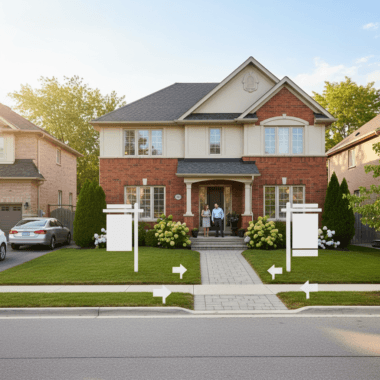
A rider sign is an attachable panel that supplements a main real estate sign with extra context—like status updates, contact methods, or property features. Riders are fast to swap, inexpensive to store, and ideal for time-bound updates that keep your primary brand panel clean and consistent.
Think of riders as your listing’s “headline updates.” They work with your main post-and-panel or frame sign to answer the next question a passerby has—before they pull out their phone.
- Core purpose: Add timely info (e.g., “Open Sat 1–4,” “New Listing,” “Sold”).
- Typical placement: Top or bottom of the main sign panel on a post, frame, or A‑frame.
- Common sizes: 6 in x 24 in and 8 in x 24 in; both read well from curb distance.
- Ideal use: Messages that change often so you don’t reprint a full sign.
- Compatibility: Works with post-and-panel, metal frames, and many curbside stands.
At Top Realtor Sign & Print, we produce custom riders that match your brokerage brand and pair cleanly with your real estate signs, so your main panel stays on-message while riders do the agile work.
Why Rider Signs Matter for Real Estate Marketing
Rider signs increase qualified inquiries by surfacing the one detail buyers need next—timing, status, feature, or contact method. They protect brand consistency, reduce reprints, and let agents react to the market in hours, not days, driving more showings and faster decisions.
Here’s the thing: curbside attention is brief. You have seconds to communicate the next step. Riders simplify that step and make your existing sign inventory work harder.
- Convert drive-bys: Short, specific prompts like “Text for Photos” lead to quick engagement.
- Protect your brand: Keep the main panel timeless; move “New Price” or “Sold” to the rider.
- React fast: Swap a rider in minutes when status or scheduling changes.
- Save materials: Reuse core signs; riders handle time-sensitive updates.
- Guide journeys: Push the action you want: text, QR scan, or open house attendance.
We’ve seen agents in the Regional Municipality of Peel boost open house traffic by clarifying day and time on a rider instead of burying it on a crowded main panel. Clean layout wins attention.
How Rider Signs Work: Mounting, Sizes, and Materials
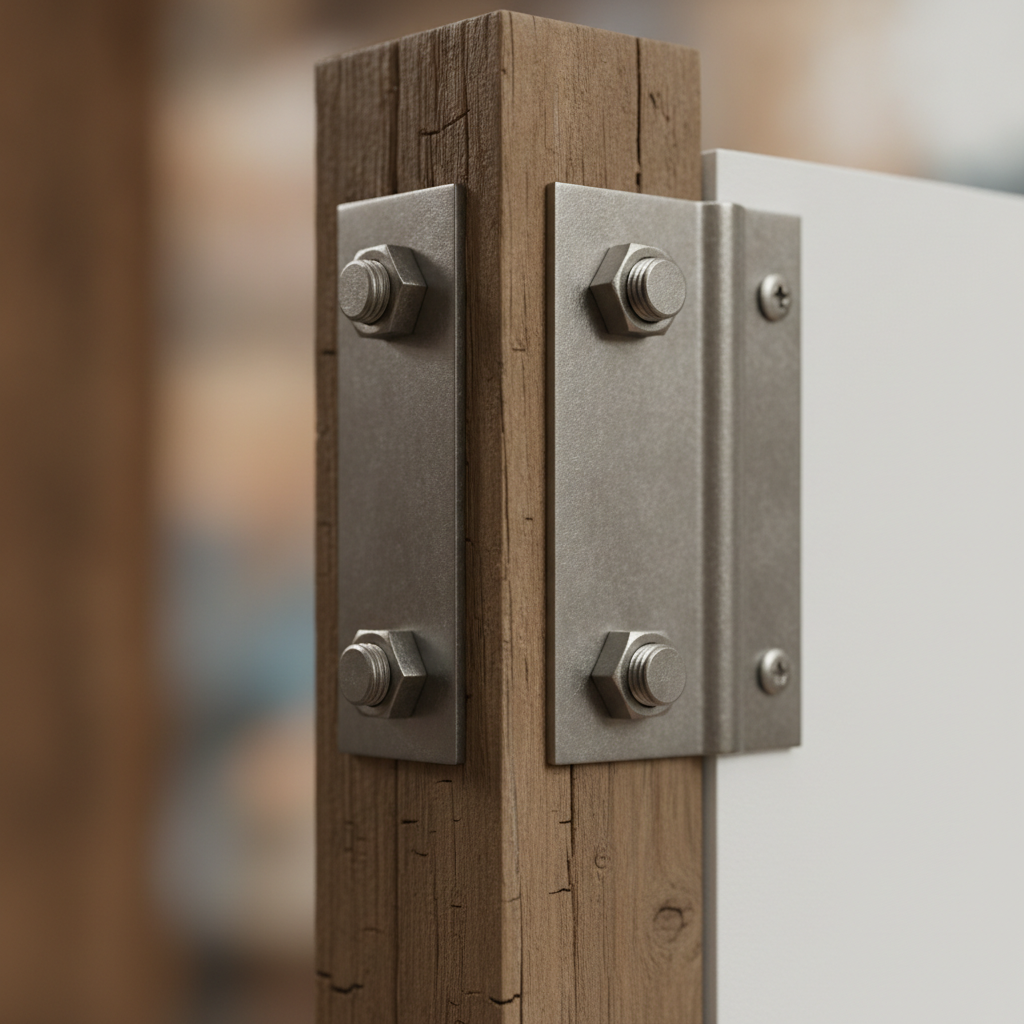
Riders mount above or below your main sign using pre-drilled holes, brackets, or clips. The most common sizes are 6×24 and 8×24 inches. Materials range from corrugated plastic for short-term use to aluminum and ACM for long-term durability and a premium feel.
Installation is simple, but choosing the right combo makes a difference. Match rider size to your sign type and curb distance, then pick a material that fits weather and timeline.
Rider mounting options
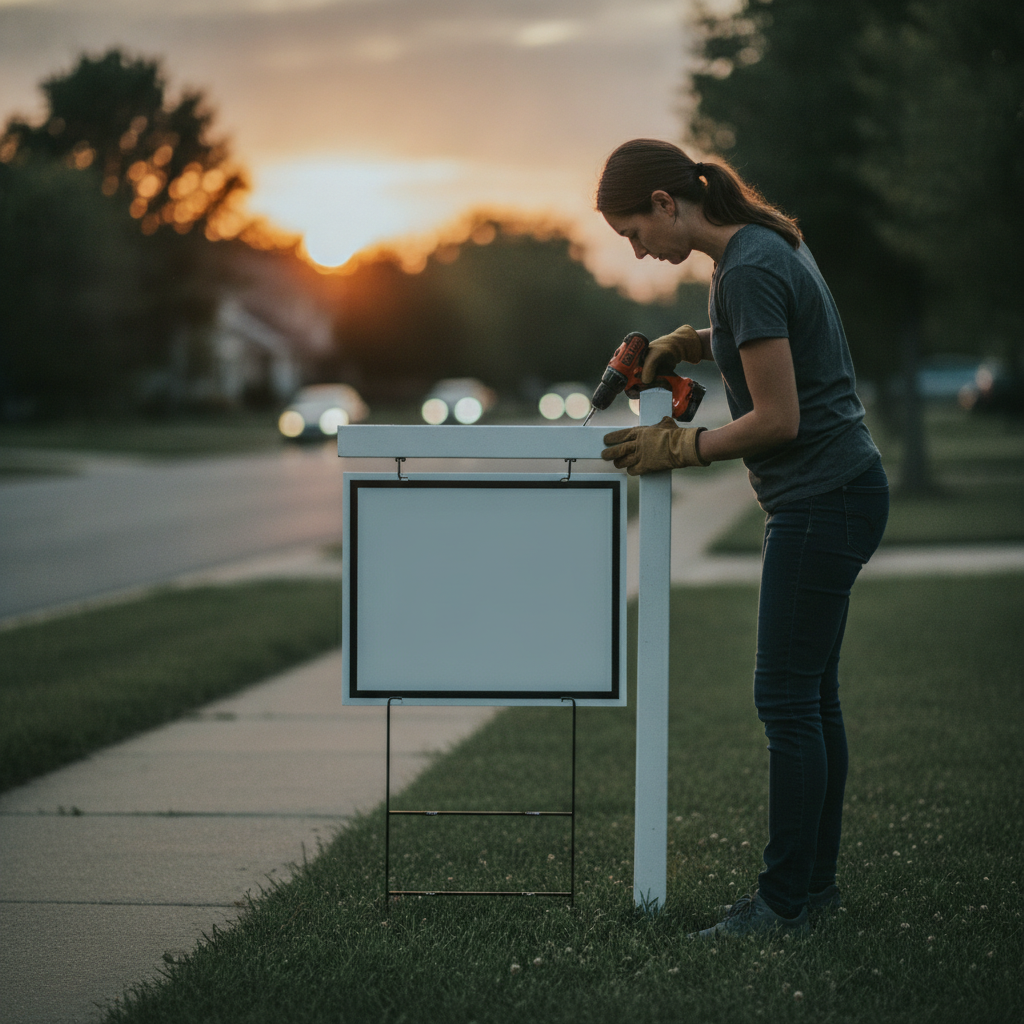
- Post-and-panel (top-mounted): Two bolts or quick-change brackets hold a 6×24 rider above the main panel.
- Bottom-mounted frames: Some metal frames accept a bottom rider; confirm hole spacing before ordering.
- Clamp-on clips: Tool-free hardware snaps riders on and off for same-day swaps.
Typical sizes and read distance
- 6 × 24 in: Ideal for short phrases; reads well at 20–30 feet.
- 8 × 24 in: Extra height improves legibility for longer drive-by sightlines.
- Letter height rule of thumb: About 1 inch of letter height per 10 feet of viewing distance.
Materials comparison
| Material | Best For | Weather Resistance | Look & Feel | Notes |
|---|---|---|---|---|
| Corrugated plastic | Short-term, frequent swaps | Good for weeks to months | Lightweight, matte | Budget-friendly; great for “Open House” cycles |
| Rigid PVC | Seasonal use | Better rigidity than corrugated | Clean white surface | Balanced durability and weight |
| Aluminum | Year-round outdoor | Excellent | Premium, professional | Resists warping; sharp print clarity |
| ACM (Aluminum Composite) | Long-term and luxury listings | Excellent | Stiff, high-end | Dimensional stability in heat/cold |
In our experience, agents who invest in a small set of durable aluminum riders—paired with a handful of corrugated plastic riders for weekend events—cover 95% of curbside scenarios.
Types of Rider Messages and When to Use Each
Choose rider messages that answer the buyer’s next question: timing, status, contact, or highlight. Keep it short, one action per rider, and swap as the listing advances through the funnel from Coming Soon to Sold.
Below are practical, field-tested rider ideas. Pick the 2–4 you use most and keep them stocked in your car or office.
- Coming Soon: Tease awareness while staging and photography finish.
- New Listing: Alert neighbors and commuters when the property hits MLS.
- Open House Sat 1–4: Drive attendance with a clear day and time.
- By Appointment Only: Set expectations for gated communities or tenant-occupied homes.
- Text for Photos: Invite mobile engagement; pair with call tracking.
- Scan for 3D Tour: Use a QR code on the rider for instant tour access.
- Feature Highlight: “Finished Basement,” “Pool,” or “Legal Duplex” draws the right buyers.
- School District: A concise, compliant nod to location benefits.
- Price Update: “New Price” prevents stale perceptions.
- Under Contract: Keep momentum while backups queue.
- Sold: Build neighborhood proof and future listing interest.
- Brokerage/Team URL: Short domain for fast recall.
- Custom Directional Cue: “Model Home →” for new builds and open houses.
Want a set that covers your entire pipeline? Pair two status riders, two event riders, two feature riders, and one QR/contact rider. We can brand them to match your For Sale signs so the whole kit reads as one system.
Design Best Practices for High-Impact Riders
Great rider design favors big type, high contrast, and one message per panel. Keep backgrounds simple, align with brokerage brand standards, and ensure hole spacing matches your post or frame before printing.
Riders should be fast to read and impossible to misinterpret at 25–40 feet. If a message needs two lines, keep them short and balanced.
Essentials that boost readability
- One action per rider: Choose “Open Sat 1–4” or “Text for Photos,” not both.
- High contrast: White on brand color or black on white maximizes legibility.
- Big type: 4–6 inch letter height is common for curb reading.
- Whitespace: Let the message breathe—crowding kills impact.
Brand and materials alignment
- Brokerage standards: Match fonts, colors, and spacing used in your main panel.
- Durability: Use aluminum or ACM for evergreen “Sold” or “Open House.”
- Finish upgrades: Consider raised spot UV or subtle sheen for premium riders.
No design software? Use our browser-based editor to build compliant artwork in minutes with templates that fit your hardware. Try the online design tool—it’s the fastest way to go from idea to press without files back-and-forth.
Tools and Resources
Streamline your rider workflow with a design editor, same-day printing options, and checklists for installation and compliance. Link your curbside message to digital experiences like QR tours or SMS autoresponders to capture leads instantly.
Set up a simple system so riders feel as routine as booking a showing.
- Design: Build artwork in our online design editor using brand colors and correct hole spacing.
- Printing: Plan ahead for evergreen riders, and use same-day pickup when dates or statuses change last minute.
- Directional support: For event days, pair riders with directional signs at key turns.
- Real estate signage hub: Browse our marketing signs or full real estate sign catalog to complete your kit.
For broader marketing context, these primers are useful references for message planning and visibility strategy: a practical signage guide, an Ontario real estate market overview, and a social media checklist for agents.
Case Studies and Examples
Riders shine when they deliver timely clarity. These real-world scenarios show how small message tweaks drive foot traffic, scan rates, and call volume—without touching the main panel.
1) Weekend open house surge
- Situation: Detached home near industrial parks draws weekday traffic but misses weekend shoppers.
- Rider used: “Open Sun 2–4.”
- Result: Higher walk-ins after switching from a vague “Open House” to a specific day and time.
2) QR adoption in commuter corridors
- Situation: Busy road with limited pull-over space.
- Rider used: “Scan for 3D Tour” with large QR.
- Result: More off-site views and agent callbacks from commuters scanning later at home.
3) Feature-first targeting
- Situation: Small bungalow with legal basement suite.
- Rider used: “Income Suite.”
- Result: Faster inquiries from investors and multi‑gen buyers.
4) Under-contract momentum
- Situation: Strong attendance but low urgency.
- Rider used: “Under Contract.”
- Result: More backup offers triggered by social proof.
5) New-build navigation
- Situation: Model home off a winding access road.
- Rider used: “Model Home →” paired with arrows.
- Result: Fewer lost visitors; smoother event flow.
6) Appointment-only properties
- Situation: Tenant-occupied condo with strict access.
- Rider used: “By Appointment Only.”
- Result: Reduced unplanned drop-ins; happier tenants.
7) Seasonal weather proofing
- Situation: Windy corner lot.
- Rider used: Aluminum rider with reinforced brackets.
- Result: No mid‑week maintenance; signage stayed square.
8) Team URL recall
- Situation: Long agent email and phone harder to remember.
- Rider used: Short URL.
- Result: More direct site visits and form fills.
9) “New Price” reframing
- Situation: Stale listing perception.
- Rider used: “New Price.”
- Result: Fresh attention and renewed showings.
10) Neighborhood proof
- Situation: Farming a subdivision.
- Rider used: “Sold.”
- Result: Neighbor calls for listing appointments.
11) Condo amenities callout
- Situation: Competitive condo market.
- Rider used: “Parking + Locker.”
- Result: Filters out mismatched buyers; saves time.
12) Rural property clarity
- Situation: Hobby farm with private lane.
- Rider used: “Private Drive—Please Call.”
- Result: Fewer drive‑ups; better-scheduled tours.
13) Pre‑listing buzz
- Situation: Contractor finishing punch list.
- Rider used: “Coming Soon.”
- Result: Early interest from neighbors with buyer friends.
For more event-day logistics, our field guide on directional sign mistakes helps keep guests from getting turned around.
Local Pickup and Mississauga Considerations
For agents around 5004 Timberlea Blvd Unit#18 in the Regional Municipality of Peel, local pickup means faster swaps when schedules change. Keep a small rider set in your car, and lean on same-day options when a date, status, or QR destination shifts with short notice.
Most rider needs are urgent. That’s why we stock materials and offer flexible production so you can pivot the message without losing momentum.
- Pair your riders with fresh directional arrows on open house weekends to reduce missed turns.
- Use aluminum or ACM during freeze-thaw seasons; rigid substrates stay straighter in cold snaps.
- Keep spare brackets and bolts in a small kit for roadside adjustments before showings.
Local considerations for 5004 Timberlea Blvd Unit#18
- Event traffic near Stanford International College can spike on weekday afternoons; post clear hours on riders to manage flow.
- Winter sunset comes early; reflective contrast on riders helps visibility for commuters.
- Weekend dog‑walker traffic from Parkway Belt Dog Park is steady—great for “Open House Today” riders.
Frequently Asked Questions
Most rider questions come down to size, placement, and what to say. Keep messages short, use high contrast, and mount riders where they balance the main panel. Below are crisp answers agents ask us every week.
What is a rider sign used for in real estate?
A rider sign adds timely details—like “Open Sat 1–4,” “Under Contract,” or a QR code—without changing the main sign. It answers the buyer’s next question at the curb and helps you react to status and schedule changes fast.
Where should I mount the rider—top or bottom?
Most agents mount riders on top of a post-and-panel for better sightlines. Bottom placement on certain metal frames also works. Check hole spacing and mount where balance and readability are best from the street.
What size rider reads best from a car?
6×24 inches handles short phrases and reads at about 20–30 feet. 8×24 inches gives extra height for longer sightlines. Aim for 1 inch of letter height per 10 feet of viewing distance as a quick rule.
How many riders should I keep on hand?
Keep a small kit that covers your pipeline: “Coming Soon,” “New Listing,” two open-house day/time riders, “Under Contract,” “Sold,” and one QR or text-for-photos rider. Store them flat to prevent warping.
Do riders work for condos or only yard signs?
They work in both contexts. On condo sandwich boards or lobby displays, riders add “By Appointment Only,” a URL, or a QR code. Always follow building policies for temporary signage and placement.
Conclusion and Next Steps
Rider signs are your fastest tool for timely, high-impact curb communication. Stock a small set, keep messages short, and align them with your main panel. You’ll boost qualified inquiries while protecting brand consistency and reducing reprints.
Key takeaways
- One message per rider; big type and high contrast.
- Use 6×24 or 8×24 inches for curb readability.
- Combine durable evergreen riders with quick‑swap event riders.
- Match brokerage brand standards across all panels.
- Keep a rider kit in your trunk for last‑minute changes.
Action steps
- Draft your core seven riders for the listing pipeline.
- Design in our online editor with correct hole spacing.
- Order evergreen riders ahead; use same‑day pickup for time‑sensitive updates.
- Round out your kit with brand‑matched signs and directional arrows.
Ready to move faster this weekend? Swing by our Mississauga shop at 5004 Timberlea Blvd Unit#18 for quick rider swaps and local pickup, or start your design online now.
Need help choosing messages? Our team prints for agents across Ontario every day. Share your listing timeline and we’ll suggest a rider kit that supports each phase—no overthinking, just clear curbside communication.