



 Our Price Brochure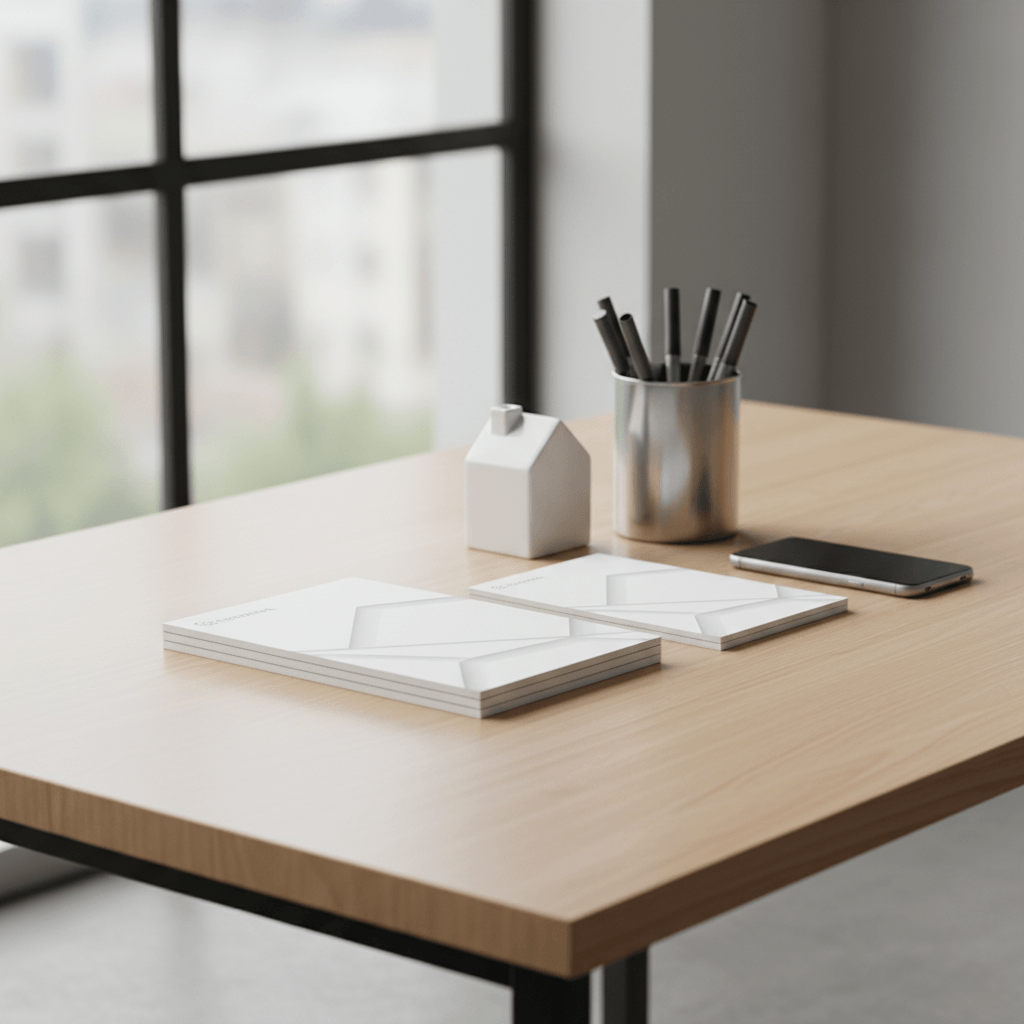
Notepads for real estate marketing are branded writing pads agents hand out at open houses, listing appointments, and in mailers to keep their name visible daily. At 5004 Timberlea Blvd Unit#18 in Mississauga, we produce these notepads in-house, so you get fast turnaround, consistent branding, and practical tools that generate follow-up calls.
By Ashwani — Top Realtor Sign & Print
Last updated: 2026-05-26
Start Here: The Realtor’s Notepad Playbook
Realtor notepads work because they’re useful, hyper-local brand reminders. This guide shows you how to design, print, and distribute notepads that attract listings and referrals—plus how to tie them into business cards, flyers, and open house kits for measurable leads.
Here’s what you’ll learn and get today:
- Clear definition of notepads for real estate marketing and why they still convert
- Design specs that print cleanly (sizes, paper, pads per order, finishes)
- A step-by-step workflow from concept to pickup at our Mississauga shop
- Placement and distribution tactics for open houses, door drops, and mailers
- How to connect notepads with related marketing materials for better ROI
- Real mini case studies from Ontario agents (no client PII)
Use this as a working playbook. Skim the sections you need, then implement the quick wins before your next open house.
What Are Notepads for Real Estate Marketing?
Real estate notepads are custom-branded pads (usually 25–100 sheets) featuring your name, brokerage-compliant branding, and contact details. They travel with clients into kitchens and offices, turning everyday to-do lists into daily brand impressions that nudge calls, texts, and referrals.
In our experience serving agents across Ontario, notepads do two jobs well: they deliver practical value and keep your name top of mind without feeling salesy. That balance is why they’re still in every high-performing agent’s kit.
Core elements to include
- Branding that matches your brokerage: Logo usage, colors, and type that align with brand rules.
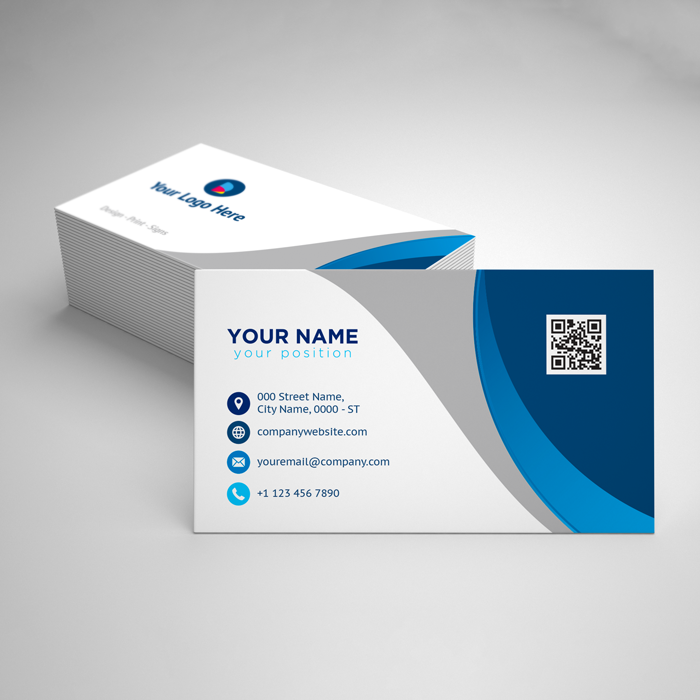
- Complete contact line: Name, title, phone, email, web URL, and a discreet QR code.
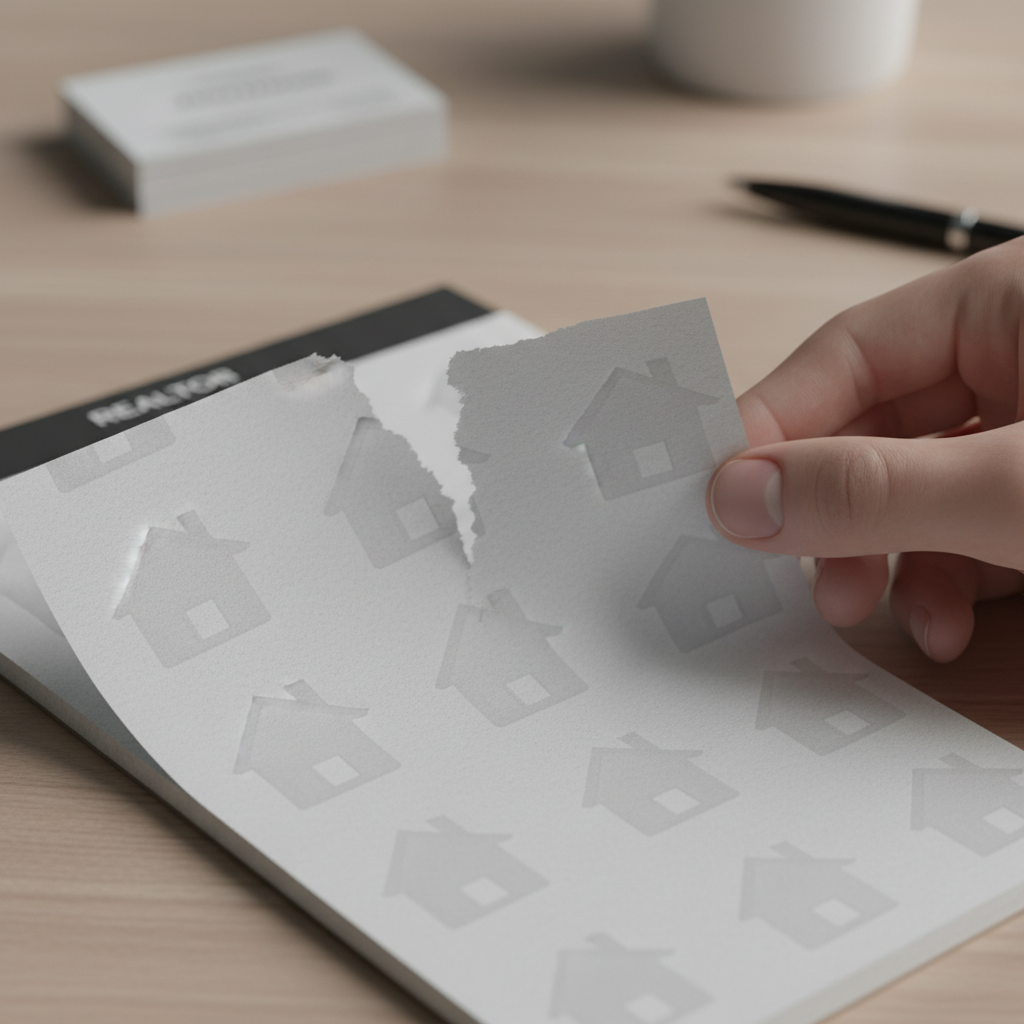
- Subtle background: Light home motif or neighborhood silhouette that won’t fight with handwriting.
- Compliance footer: Brokerage/legal line in readable, non-dominant placement.
Need a ready-to-print layout? Our standard notepad product and custom notepad service both support quick uploads, proofing, and brand checks.
Why Notepads Still Work in 2026
Branded notepads convert because they’re used daily, last weeks, and feel like a gift. In the Regional Municipality of Peel, same-day pickup at 5004 Timberlea Blvd Unit#18 makes them timely for open houses, farming drops, and pop-by gifts that spark follow-up conversations.
Here’s the thing: people keep useful items around. A pad on a fridge or desk earns dozens of brand impressions per household. Unlike a single postcard, a 50-sheet pad can generate 50+ brand touches from one handoff. That compounding effect powers recall when it’s time to list.
Proof points you can observe
- Longevity: A 50-sheet pad often sits in the kitchen 4–8 weeks—multiple impressions for a single distribution.
- Behavioral nudge: Notetaking happens at decision moments (repairs, staging, move planning). Your name is right there.
- Low friction: Recipients accept and use notepads without the “hard sell” resistance that some mailers get.
Local considerations for 5004 Timberlea Blvd Unit#18
- Plan Friday pickups for weekend opens near Canadore College at Stanford Mississauga Campus—traffic is strong when students and staff tour rentals.
- Stock seasonal pads (winter prep checklist, spring clean list). Weather shifts in Peel change homeowner to-dos.
- For dog-friendly neighborhood pop-bys, keep a small stack in your car after stops at Parkway Belt Dog Park.
How Notepad Marketing Works (From Design to Distribution)
Effective notepad campaigns follow a tight loop: align branding, finalize print-ready art, choose pad specs, print locally, then place pads where decisions happen. Track replies via QR, URL, or a unique phone line, and restock based on open-house and farming calendars.
Step-by-step workflow we recommend
- Clarify the goal: Listing leads? Sphere touch? Open house sign-ins? Define 1–2 outcomes.
- Design the pad: Use our online design tool or ask in-house designers for brokerage-aligned art.
- Choose specs: Size (4×6 to 8.5×11), sheet count (25/50/100), and paper (bond vs. premium).
- Proof fast: Approve the digital proof and confirm trims/margins for clean handwriting space.
- Print and pad: We produce in-house for consistent color, glue strength, and chipboard backing.
- Deploy: Hand out at opens, include in listing folders, add to door hanger drops.
- Measure: Use a trackable short URL or QR-specific landing page to confirm response.
- Iterate: Refresh background art per season or swap calls-to-action after 6–8 weeks.
Tip: Align notepads with collateral. When your notepad, business cards, flyers, and stickers share a visual system, recall rises because every touch looks and feels connected.
Types of Realtor Notepads and When to Use Them
Pick pad types by context: pocket pads for pop-bys, mid-size for open houses, letter-size for listing packets. Match sheet count and paper weight to expected use so pads feel premium, write smoothly, and survive kitchen counters and backpacks.
Popular sizes and specs
| Size | Best Use | Typical Sheets | Paper | Notes |
|---|---|---|---|---|
| 4 x 6 in | Pop-bys, cashier counters, add-ons to mailers | 25–50 | 60–70 lb text | Portable; pair with magnets or clips |
| 5 x 7 in | Open houses, neighborhood events | 50 | 70–80 lb text | Great balance of space and cost-efficiency |
| 5.5 x 8.5 in | Listing folders, move checklists | 50–100 | 70–80 lb text | Most versatile; ample writing area |
| 8.5 x 11 in | Consultations, presentations | 50 | 70–80 lb text | Professional feel; room for forms |
Finishes and functional options
- Clean, uncoated writing surface for smooth pen performance (avoid shiny coatings that smear ink).
- Chipboard backing so pads hold shape in go-bags and at sign-in tables.
- Perforation for tidy tear-out; handy with forms or checklists.
- Magnet strip option to live on fridges near the phone.
- QR codes pointing to a “What’s your home worth?” landing page.
We keep the popular sizes in rotation inside our Notepads category and can match them to your brand system in one pass.
Best Practices for High-Response Notepads
Design for utility first, brand second. Keep generous writing space, add a single clear call-to-action, and use trackable QR or URL. Hand notepads out where decisions happen—kitchens, entry tables, and open house sign-ins—to turn notes into appointments.
Design guidelines that print clean and write well
- Keep lines subtle or skip them to avoid fighting the handwriting.
- Use high-contrast contact info so phone and web are readable from 2–3 feet.
- Reserve the top third for brand and call-to-action; leave the rest for notes.
- Mind margins (0.25–0.375 in) so no text trims off during finishing.
- Add a single CTA: “Text to see new listings,” “Free home prep checklist,” or “QR for instant valuation.”
Distribution tactics agents actually use
- Open house stack: 1 pad at sign-in, 1 at kitchen island, a few by exit with business cards.
- Farming loop: Pair notepads with door hangers; alternate streets weekly to stay present.
- Listing folders: Include a mid-size pad plus a pre-printed “next steps” insert.
- Pop-bys: Drop a pocket pad with a handwritten note; it feels personal and memorable.
- Community boards: Offer a communal pad and pen at HOA meetings or school events (with permission).
Bundle strategy: Our Realtor packages consolidate notepads, cards, and signs so you roll out a cohesive kit without juggling vendors.
Tools and Resources Agents Actually Use
You don’t need design software to get pro results. Use our browser-based editor for quick customization, or hand off brand files to our in-house designers. Tie QR codes to landing pages, UTM tags, or a unique phone number to confirm which pad placements drive calls.
On the design and print side
- Online design tool: Build layouts in your browser and preview trims live.
- In-house design team: We align with brokerage guidelines, fix bleeds, and ready your files.
- Consistent color: Same press profile across notepads, marketing materials, and cards to keep your palette stable.
On the tracking and CRM side
- QR + short URL: Unique codes per tactic (open house vs. pop-by) tell you what works.
- Call tracking line: Forward to your mobile; tag leads by where the pad lived.
- Simple spreadsheet: Log date, location, quantity, replies, and appointments set.
For broader strategy thinking, compare your plan against a general marketing strategy overview and adapt it to local realities, inventory, and seasonality.
Case Studies: Quick Wins We See in Ontario
Short, targeted drops beat big, unfocused blasts. When agents place pads where decisions happen—kitchen islands, sign-in tables, and office desks—calls and texts follow. These mini-scenarios show how to right-size specs and placement for fast wins.
Open house follow-up that actually gets replies
- Scenario: Semi-detached open in a family neighborhood. Two pads on the island, one at sign-in.
- Result: QR scans during the tour lead to valuation page visits that evening.
- Why it worked: The pad lives where buyers set phones and paperwork. Call-to-action stayed in view.
Pop-by touch that doesn’t feel salesy
- Scenario: Agent runs a monthly “home maintenance” theme. Delivers pocket pads with a handwritten line.
- Result: Sphere mentions the agent’s name in homeowner group chats when friends ask for referrals.
- Why it worked: Useful, lightweight, and personal. The pad sticks around for weeks.
Listing presentation confidence
- Scenario: Letter-size pad printed with a light grid and top branding inside presentation folders.
- Result: Sellers take notes on staging asks, then leave the pad by the fridge—keeping the agent visible.
- Why it worked: Uncoated stock writes clean; the pad becomes a household command center.

Integration with your other pieces
- Business cards: Mirror the same headshot and color system—see our guidance on what to put on realtor business cards.
- Stickers: Add small brand seals on folders or giveaways—see ideas in stickers for realtor branding.
- Checklists: Align with your marketing materials checklist so every touchpoint tells the same story.
Soft CTA: Need design help or a rush pickup? Swing by our Mississauga shop or start your order in the Notepads tag. We’ll align artwork, prep proofs, and coordinate same-day options where possible.
Trends and Insights Agents Should Note in 2026
Short-form QR journeys, clean uncoated stocks, and seasonal themes dominate winning pad designs in 2026. Keep journeys one tap long, emphasize utility over decoration, and swap background art by season to refresh attention without retraining your audience.
- One-tap journeys: QR should land on a short form or valuation tool—no long nav.
- Neutral palettes: Let your brand accents stand out; keep the writing area bright and clean.
- Seasonal refreshes: Spring clean lists, summer move prep, fall maintenance, winter safety.
- Consistency across kits: Notepad, card, and flyer should look like siblings, not cousins.
For inspiration maps and checklists, you can cross-check ideas against a general real estate listings guide or a mobile app features checklist and condense them into a single, scannable QR page.
Frequently Asked Questions
Agents ask most about sizes, sheet counts, compliance, QR placement, and how to measure results. Here are direct, practical answers you can act on today without redesigning your entire kit.
What size notepads work best for open houses?
A 5 x 7 or 5.5 x 8.5 inch pad balances space and portability. It sits well on kitchen islands and sign-in tables, and it gives buyers room to note features and questions without feeling cramped.
How many sheets per pad should I choose?
Fifty sheets is the sweet spot for most use cases. It lasts several weeks in a kitchen or office, feels substantial in hand, and still keeps total pad weight manageable for event kits and door-drop bags.
Where should I place QR codes on notepads?
Bottom-right or top-right corners work well. Keep the code at least 0.8 inches wide with clear white space, and send it to a single-step page like a valuation tool or a short “book a consult” form.
Can you match my brokerage’s brand standards?
Yes. Our team aligns logo usage, color, and typography with brokerage requirements and prepares files so they print cleanly. We’ll also advise on compliance lines and legibility before we run production.
Conclusion and Next Steps
Notepads remain the simplest, most useful leave-behind in real estate. When you pair clean design with smart placement and trackable calls-to-action, they turn everyday notes into listing conversations. Start small, measure, and repeat what works.
Key takeaways
- Design for utility: clear contact line, generous writing space, one CTA.
- Place pads where decisions happen: kitchens, open house sign-ins, listing folders.
- Track with QR/URLs and restock on a set cadence tied to your calendar.
Simple action plan
- Choose a size and sheet count from our standard notepads or custom options.
- Upload brand files or use the online editor; approve your proof.
- Pick up at our Mississauga shop and place pads where they’ll be used most.
Ready to build momentum? Visit us at 5004 Timberlea Blvd Unit#18 for hands-on guidance, or start online in the Notepads category. Your next listing conversation could start with a single sheet.