Last updated: October 2026
Small businesses often need branded products that do more than look good on delivery day. Staff shirts are washed, tote bags are reused, and event apparel may be handled by hundreds of people. Screen printing applies ink through a prepared mesh stencil, creating a practical way to place a recognisable mark on garments and promotional goods while keeping the design consistent from one batch to the next.
For a business serving Mississauga and the surrounding Ontario market, the decision is not simply whether a logo can be printed. The more useful questions are which items deserve screen printing, how many colours and locations the design needs, whether the artwork is production-ready, and how the apparel should coordinate with signs, cards, flyers, or banners. This guide answers those questions without treating one decoration method as right for every project.
By the Top Realtor Sign & Print team
Refreshed for the next publication cycle
When screen printing makes sense for a small business
Screen printing is most useful when a business has a repeatable design, a reasonably consistent product selection, and a run large enough for setup to be worthwhile. It works particularly well for staff uniforms, event shirts, promotional tees, canvas totes, hoodies, aprons, and other items carrying one or more solid-colour marks.
- Choose it for: durable logos, opaque ink on dark garments, repeat orders, and bold spot colours.
- Plan carefully for: multiple print locations, complex artwork, very small quantities, and garments made from sensitive performance fabrics.
- Prepare: vector artwork, outlined type, colour references, garment details, size quantities, and placement measurements.
- Pair it with: coordinated signage and printed collateral when customers should experience the same brand at an event, storefront, or appointment.
There is no universal minimum quantity that applies to every shop or design. As a planning principle, a repeatable two- or three-colour design becomes easier to justify as the quantity grows because screen preparation and setup are spread over more pieces. A local printer can confirm the practical minimum after reviewing the artwork, garment, colour count, and print locations.
What is screen printing for small business branding?
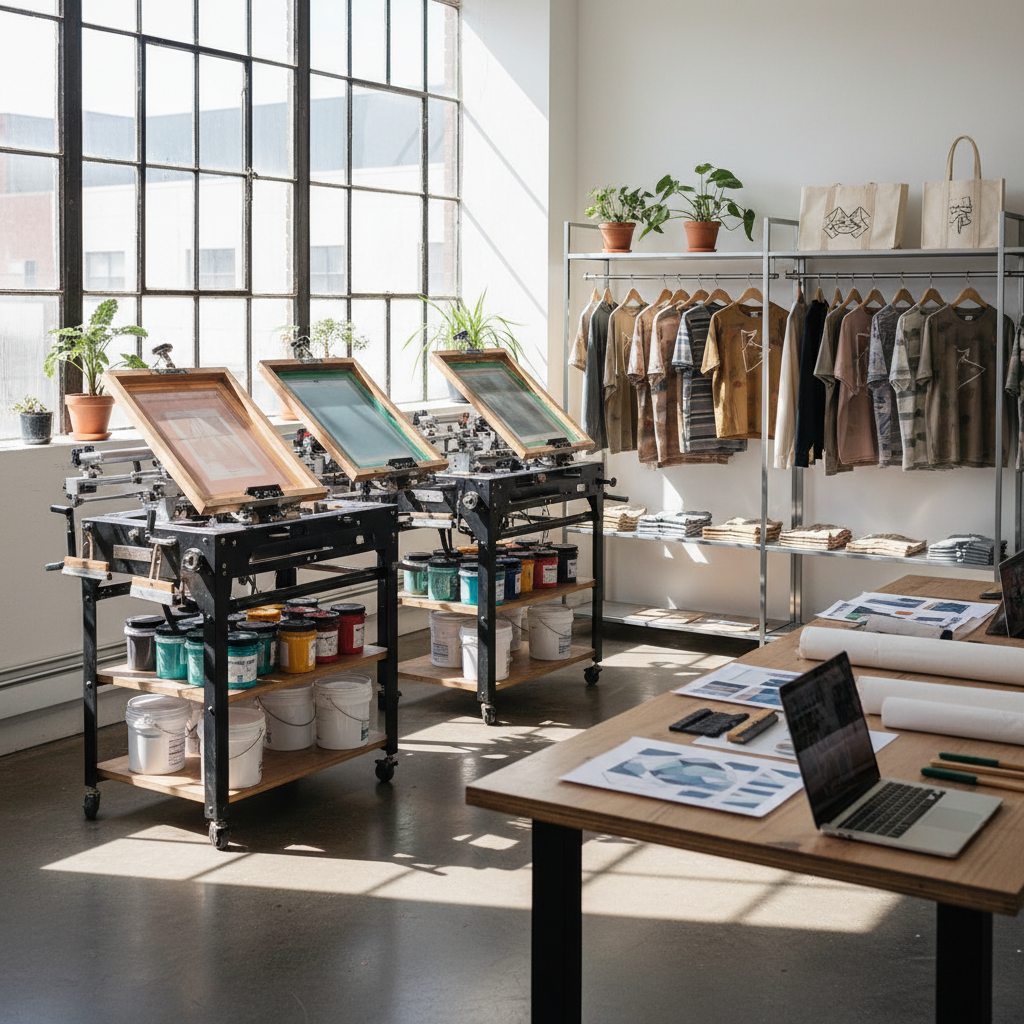
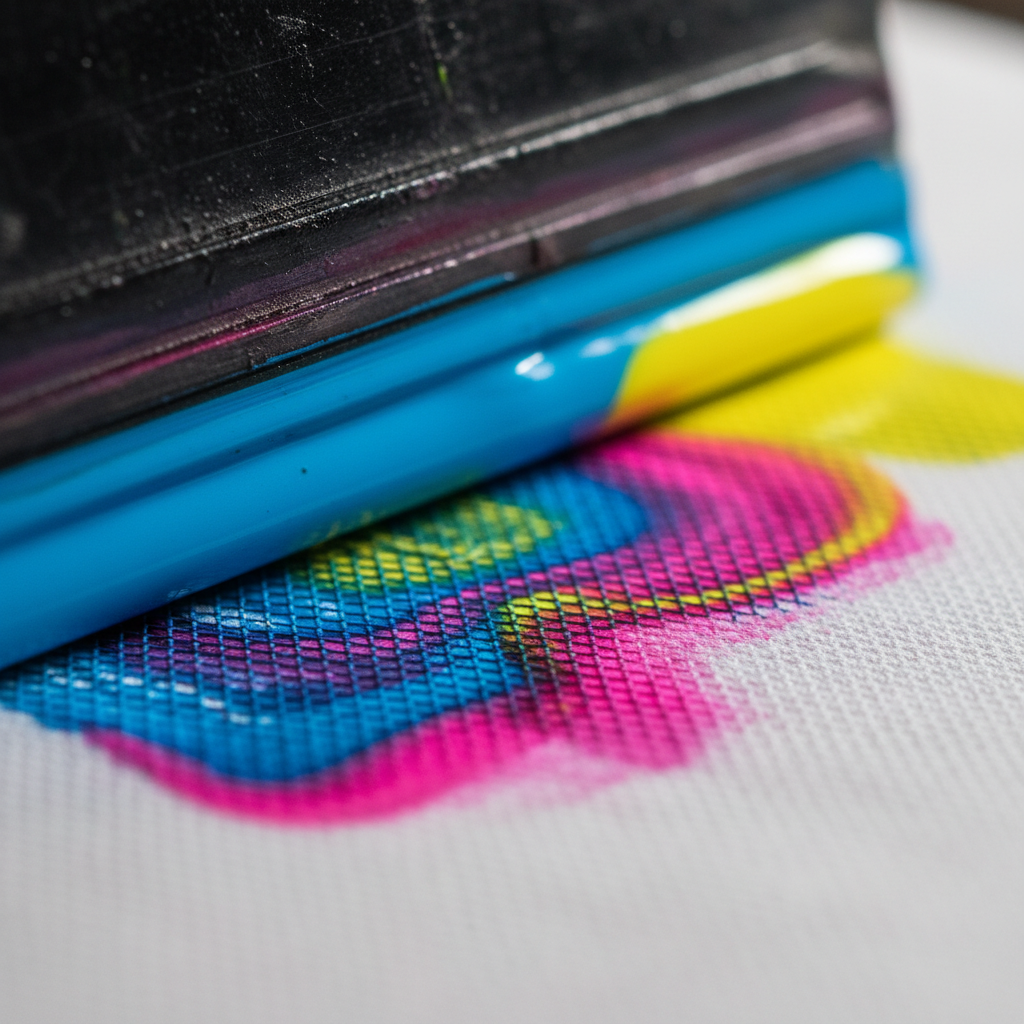
Screen printing uses a fine mesh screen, a stencil, ink, and a squeegee. The blocked areas of the stencil stop ink while the open areas allow it to pass onto the selected substrate. Each additional spot colour normally requires its own screen, and the screens must be registered so the layers align accurately.
Ontario’s commercial-printing guidance describes a screen-printing press as a production assembly using one or more inking systems and a stencilled screen through which ink is squeezed to transfer an image to a substrate. The guidance also addresses associated equipment such as dryers and screen-reclaiming equipment, making it a useful reference when a business wants to understand the production environment rather than just the finished shirt.
For branding, the central benefit is repeatability. A logo can be reproduced on a staff shirt, tote, hoodie, or apron with the same basic artwork and colour references. Screen printing is not automatically the best choice for every product, but it is often a sensible fit when the design uses solid colours and the finished mark needs to tolerate regular use.
Why screen printing supports a consistent brand
Branded apparel creates repeated exposure in places where a customer may not otherwise see a company’s name. A team member at a community event, a courier wearing a branded hoodie, or a customer carrying a tote can extend the brand beyond a storefront or digital ad. That value depends on the mark being readable, recognisable, and consistent across the items people actually use.
Durability for items used repeatedly
A properly cured print can withstand regular wear and washing, although its lifespan depends on the ink system, garment fibres, curing conditions, print coverage, and care instructions. A printer should select and cure ink according to its technical requirements rather than relying on a generic temperature or time for every job.
Colour control across touchpoints
Spot-colour printing can support a defined brand palette, particularly when the business supplies recognised colour references and approves the result under suitable lighting. Fabric, ink, texture, and viewing conditions still affect appearance, so a screen print should not be expected to match a screen display perfectly without a controlled approval process.
Useful visibility without redesigning every item
A simple logo system can be adapted to a left-chest mark, a larger front print, a tote panel, or an apron without changing the underlying identity. The strongest systems define which lockup, colour combination, and minimum size belongs in each location before production begins.
How the screen-printing process works
The production sequence turns approved artwork into one or more physical stencils and then transfers ink to the selected item. Understanding the stages helps a small business provide better files, approve decisions faster, and identify where a delay or quality issue may occur.
- Artwork review: The printer checks the file, print size, line detail, colour count, garment type, and requested locations. Missing fonts, unclear colours, or low-resolution artwork should be resolved before separation.
- Colour separation: The design is divided into its printing colours. A two-colour logo generally requires two colour layers, while a dark garment may also need a white underbase beneath lighter colours.
- Screen preparation: Each screen is coated with photo-sensitive emulsion and exposed so the appropriate image area remains open. Mesh selection affects ink deposit, detail, and coverage.
- Press setup: The screens are mounted and aligned. Registration, off-contact distance, squeegee pressure, and ink choice all influence edge sharpness and colour coverage.
- Test print: A test or proof allows the team to check size, position, opacity, registration, and the relationship between ink and fabric before the full run.
- Production run: The printer loads the garments or goods, prints each colour in sequence, and uses intermediate drying or flashing where required.
- Curing: The ink is brought through its specified curing process. The correct result depends on the ink manufacturer’s requirements and the substrate, not on a single universal setting.
- Quality control: Samples are checked for placement, colour, registration, coverage, and curing. The finished goods are then counted, packed, and prepared for pickup or delivery.
Businesses should ask how approvals are handled, when garment shortages are communicated, and whether the printer retains approved art for future reorders. Those details can matter as much as the initial print method when a launch date or event is fixed.
Choosing inks, garments, and print applications
Ink and garment selection determine how a print looks and feels. The design may be technically correct but still disappoint if the ink feels too heavy, the fabric shifts colour, or a performance garment requires a different approach from a cotton tee.
Plastisol ink
Plastisol is widely used for opaque, durable apparel printing and can be a practical choice for bold logos on light or dark garments. It generally sits as a film on the surface, which can make a solid brand colour visually strong. The printer must follow the product’s curing requirements and account for the fabric blend.
Water-based and discharge approaches
Water-based ink can produce a softer hand because it penetrates the fibres rather than forming the same type of surface film. Discharge systems are used with suitable dyed garments to replace or alter the garment colour beneath the print. These methods require appropriate fabric, process control, and expectations about colour variation.
Special effects
Puff, metallic, neon, and other specialty effects can help a campaign stand out, but they should support the identity rather than make the logo harder to reproduce. A small business may get more long-term value from reserving an effect for one accent or limited campaign item while keeping the core uniform simple.
Garment and product choices
Cotton and cotton blends are common starting points because they are familiar, comfortable, and available in many styles. Hoodies, polos, aprons, canvas totes, and selected workwear can also suit screen printing. Performance fabrics, seams, coatings, and stretchy materials should be reviewed before the order is finalised.
Branding practices that reduce production problems
A good screen-printing project begins with a small set of decisions that are written down. Without those decisions, a printer may have to interpret the logo, substitute colours, or guess how a design should scale between a small shirt and a large tote.
Define the logo system before ordering
Identify the primary logo, alternate lockups, approved colours, minimum size, clear space, and permitted background colours. Decide whether the same mark will be used on the left chest, full front, sleeve, tote, or apron. A one-page brand sheet can prevent conflicting versions from being sent in separate emails.
Limit colour complexity where appropriate
Every spot colour affects screen preparation, registration, and production handling. A two- or three-colour design is not automatically superior, but simplifying the core mark can make reorders easier and help the brand remain recognisable at smaller sizes.
Check contrast and detail
Fine lines, tiny text, narrow gaps, and subtle tonal changes may not reproduce as expected on fabric. Review the actual intended size rather than approving only a large digital mockup. A dark garment may need an underbase, which can affect both opacity and the final hand feel.
Approve a physical result
A digital preview helps with placement, but it cannot fully show fabric texture, ink thickness, or the way a colour behaves against a particular garment. When the colour or placement is important, request a proof or sample before committing to the complete run.
File preparation checklist
Supply the cleanest source file available. Vector artwork such as AI, EPS, SVG, or a press-ready PDF is generally easier to separate and scale than a small raster image. Fonts should be outlined, strokes and appearances expanded where appropriate, and each colour clearly identified.
- Provide the intended print size and placement in inches or millimetres.
- Include outlined type and avoid relying on fonts that the printer may not have.
- Label spot-colour layers and provide colour references for approval.
- Supply a high-resolution raster file only when it is large enough for the final size; 300 DPI at final output size is a useful preparation target.
- Show the artwork on the actual garment colour, especially when using an underbase or light ink.
- List quantities by garment style, colour, and size so the printer can confirm stock.
- Keep approved art, proof notes, garment details, and reorder instructions together.
Use descriptive filenames such as Brand-Logo-2C-DarkGarment-Front.pdf. Keeping original artwork separate from press-ready files helps prevent accidental edits to the master logo while still giving the printer a clear production version.
How to choose a Mississauga printing partner
A local partner can be useful when the business needs coordinated apparel and printed materials, has a short event timeline, or wants to review a proof in person. Mississauga has providers offering combinations of screen printing, embroidery, transfers, promotional products, signage, and digital printing, so the most suitable choice depends on the project rather than the label alone.
Questions to ask before approving the run
- Which garment styles and fabric blends are suitable for the artwork?
- How will dark garments, underbases, halftones, or specialty effects be handled?
- What artwork formats and colour references are required?
- Will a physical or digital proof be supplied, and what can still change after approval?
- How are shortages, misprints, reorders, and excess garments handled?
- Can the same approved artwork be used for signs, cards, banners, or handouts?
- What pickup window is realistic for the complete order rather than only one item?
Top Realtor Sign & Print operates from 5004 Timberlea Blvd Unit#18 in Mississauga and presents itself as a one-stop provider for signs, print collateral, large-format graphics, apparel, and in-house design. That combination can simplify a brand rollout when one team needs to coordinate apparel with high-visibility sign design, rather than managing separate artwork approvals with several vendors.
For a launch or community event, ask about timing early. Traffic and seasonal demand can affect pickup planning, and garment availability may change before production begins. Where eligible products are needed urgently, the business also provides information about same-day pickup options; confirm availability and artwork requirements before relying on that window.
Practical branding scenarios
The right order depends on how the business will use the items. These examples show how to think about the application without assuming that every organisation needs the same quantity, garment, or decoration method.
Open house or property-event team
A small real estate team might use consistent polos or tees for hosts, a limited number of totes for visitors, and signs to direct people to the event. The logo should remain legible at conversational distance, and the apparel colour should not compete with the property or directional information. Coordinating apparel with sign and print packages for agents can reduce colour and file-version confusion.
Local café or food business
A café may need aprons for staff, shirts for a launch, and totes for regular customers. A durable two-colour chest mark can be easier to reorder than a large, highly detailed illustration. The business should also consider stain exposure, washing frequency, and whether the selected fabric is comfortable during long shifts.
Nonprofit or community event
An event organiser may order volunteer shirts, sponsor totes, and a banner. The shirt design can use a simplified one-colour mark for speed and readability while the banner carries more information. Confirm quantities and sizes early, because a replacement garment or late size change may not be available on the same schedule.
Pop-up retailer or maker
A small retailer can use screen-printed apparel as both staff wear and merchandise. In that case, the design, garment quality, size range, care instructions, and packaging become part of the customer experience. Keep the approved garment and artwork record so the next production run does not unintentionally change the product.

Screen printing compared with other decoration methods
Screen printing is one option in a broader production decision. Compare the method against the design, quantity, fabric, personalisation needs, and expected use rather than choosing based only on the lowest apparent setup effort.
| Method | Often suitable for | Advantages | Trade-offs |
|---|---|---|---|
| Screen printing | Repeatable logos, spot colours, medium or larger runs | Strong opacity, durable results when properly cured, efficient repeat production | Setup per colour; less convenient for one-off variable designs |
| Direct-to-garment | Small runs, illustrations, gradients, photographic artwork | Detailed full-colour output with limited screen setup | Fabric and colour limitations; finish and durability vary by process |
| DTF or other heat transfer | Short runs, names, numbers, personalisation | Flexible artwork and variable details | Transfer feel and durability depend on film, adhesive, garment, and application |
| Embroidery | Polos, caps, jackets, and premium uniform marks | Textured, professional appearance and strong suitability for some workwear | Not ideal for large detailed artwork or very fine lettering |
| Sublimation | Suitable polyester products and all-over colour applications | Colourful results integrated into compatible fibres | Material and garment-colour requirements limit its use |
Choose screen printing when the core requirement is a consistent, durable spot-colour mark. Choose a transfer or digital process when every item needs a different name, number, image, or very small quantity. Embroidery may be a better fit for a raised uniform mark, while sublimation belongs to a narrower set of compatible products.
Planning investment and branding return
Screen-printing return on investment is not only a lower cost per unit. It can also come from using the same approved identity across products, reducing redesign work, improving recognition, and avoiding rushed replacement orders. The useful calculation starts with the business purpose for each item.
Variables that affect the production decision
- Quantity: Larger repeatable runs usually spread setup work over more units.
- Colour count: Each additional colour can add separation and setup complexity.
- Print locations: Front, back, sleeve, and neck labels each require additional planning and handling.
- Garment choice: Fabric, colour, weight, sizing, and availability affect suitability and consistency.
- Artwork condition: Clean vector files reduce correction time and prevent avoidable production changes.
- Timing: Rush production can limit garment choices and reduce the opportunity to approve a physical result.
- Reorder strategy: Retaining the approved artwork, garment details, and colour references makes future runs easier to reproduce.
A simple way to evaluate the result
Before ordering, define who will use the item, how often it will be seen, how long it should last, and what action it should support. A staff uniform may be judged by comfort and repeat washing; a promotional tote may be judged by how often it is carried; a resale shirt may be judged by perceived quality and design appeal.
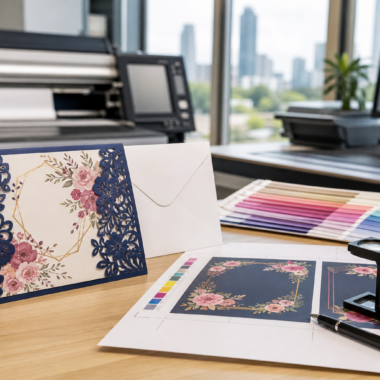
Then compare the complete project, including artwork preparation, garments, setup, production, proofing, packing, and pickup. If the project also requires business cards, flyers, or banners, coordinating the identity in one brief can reduce duplicated approvals. For premium card finishes and ordering considerations, see this guide to ordering luxury business cards.
Building a reusable small-business brand kit
A reusable kit helps a business move from one campaign to the next without recreating production decisions. Keep the master logo files, outlined fonts, colour references, approved garment names, placement measurements, proof images, and reorder notes in a shared folder with clear permissions.
Separate brand assets from production assets. The master logo should remain editable, while each press-ready file should identify its colour count, garment colour, print location, and intended size. This structure helps a new team member understand which file to use and gives a printer enough context to reproduce an approved result.
When the same identity appears on apparel, handouts, and large-format products, prioritise visual consistency without assuming that every material will look identical. Fabric, paper, vinyl, lighting, and viewing distance all change colour perception. The goal is a coherent system with controlled references, not an unrealistic promise of identical appearance across every substrate.
Frequently asked questions
Is screen printing good for small business branding?
Yes, when the business needs durable, repeatable branding on apparel, totes, uniforms, or similar products. It is especially suitable for solid colours and repeat orders, while digital or transfer methods may be more efficient for one-off items, photographic artwork, or extensive personalisation.
What artwork file is best for screen printing?
Vector AI, EPS, SVG, or press-ready PDF files are usually the most useful because they can scale cleanly and separate by colour. Outline fonts, identify spot colours, state the final print size, and provide a high-resolution raster file only when it is large enough for the intended output.
How long do screen-printed shirts last?
Longevity depends on the ink, garment, curing process, print coverage, washing, and daily wear. A correctly produced and cared-for print can remain serviceable through repeated use, but a printer should confirm care instructions and avoid promising one fixed lifespan for every garment.
Should a small business choose screen printing or heat transfer?
Choose screen printing for repeatable spot-colour designs and medium or larger runs where durability and opacity matter. Choose heat transfer for short runs, variable names or numbers, and artwork that would require substantial screen setup; compare the expected feel, durability, and fabric compatibility before approving the job.
Start with a repeatable brand system
Screen printing can turn a clear logo into a durable, visible brand asset, but the best result comes from decisions made before the press is running. Define the logo system, select suitable garments, prepare vector artwork, specify colours and placements, approve the result, and retain the production record for future reorders.
Whether the project is for a Mississauga team, a community event, a café, or a growing local business, a coordinated plan makes apparel easier to use alongside signs and printed materials. When you are ready to organise a screen-printing run and the supporting brand pieces, contact Top Realtor Sign & Print to discuss the artwork, products, timeline, and pickup requirements.