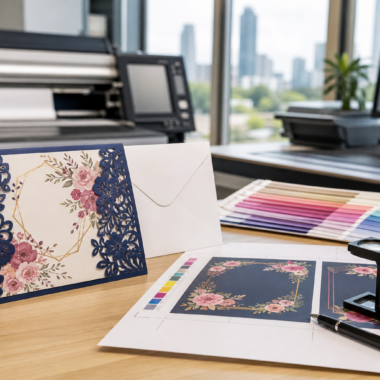

In-house design for Realtor marketing means the sign-and-print provider’s own design team prepares, adapts, or preflights artwork for products such as signs, business cards, feature sheets, and brochures. Choose it when you need brand-aligned artwork connected directly to printing; use an online editor or your own files when the layout is already simple and approved.
What in-house design means in Realtor printing
In this context, in-house design is print-focused graphic design performed by the provider’s own team. The work may include creating a layout from your brief, adapting an existing brokerage template, checking artwork for production, preparing different sizes, and coordinating the finished file with the selected product.
Top Realtor Sign & Print states that its in-house designers create professional REALTOR signs, business cards, feature sheets, brochures, and other marketing materials. That is different from hiring a residential designer to plan a home or an interior designer to develop a room’s appearance.
How the related design terms differ
- In-house print design: Artwork prepared by a sign or print provider for physical marketing materials.
- House style: A consistent visual system, such as approved colours, fonts, logo use, image treatment, and layout conventions.
- House designer: Usually a person who designs homes or residential spaces, not a provider preparing Realtor signs.
- Residential design: Planning or designing a home, its spaces, or its architectural features.
For an agent, the practical question is whether the team can turn your brand assets and project information into readable, accurate artwork for the material and setting you have chosen.
Which design route fits your project?
The right route depends on how ready your artwork is, how many products must match, how soon you need them, and how much production guidance you want.
| Design route | Best fit | Main trade-off |
|---|---|---|
| Your own approved artwork | Correct, print-ready files and confirmed dimensions. | You manage layout, file setup, and errors. |
| Online design editor | A straightforward layout you want to edit in a browser. | You remain responsible for design choices and final checks. |
| Freelance designer | A broader identity project or an independent creative partner. | You coordinate the designer, printer, specifications, proofs, and revisions. |
| In-house sign-and-print team | Design help connected to a specific product, deadline, or matching material set. | Scope, revisions, and design charges must be confirmed. |
Use your own artwork when the logo, contact details, dimensions, and brokerage approvals are settled. Choose an online design editor for modest changes to a familiar layout.
In-house design is especially useful when one project needs several physical formats, artwork is incomplete, or a layout must work on a roadside sign as well as a small card.
The in-house design workflow from brief to finished order

A good process turns an open-ended design request into clear decisions. You should know what is being designed, what you must approve, and which production details affect the result. Related reading: In-House Cabinetry Manufacturing: What Homeowners Should Know Before Choosing a Renovation….
- Define the job. Identify whether it is for a listing, open house, prospecting, appointment, brokerage campaign, or recurring brand system.
- Collect the assets. Provide the approved logo, brokerage requirements, colours, fonts, agent details, listing information, photos, and QR destination.
- Choose specifications. Confirm dimensions, orientation, material, printed sides, quantity, finish, display method, and required date.
- Create or adapt the layout. The team establishes hierarchy, contrast, type sizes, image placement, and contact information.
- Review the proof. Check every phone number, URL, date, price, address, QR destination, spelling, dimension, side, and orientation.
- Approve corrections. Consolidate feedback and confirm included revisions, design fees, and design timing.
- Produce and fulfil the order. Pickup or delivery depends on the product and order arrangement. Same-day service is not universal.
When artwork is not ready, an in-house design team can create a custom listing-sign layout that matches your branding. Ask what information is needed before the first concept.
What an in-house team can design for Realtors

Design support is most useful when it connects the message to the physical format. A listing sign, open house display, and business card may share a brand system, but they should not use identical information density or type sizes.
For Sale signs for roadside visibility
For Sale signs need a short hierarchy that can be understood quickly. Choose the format, material, mounting method, and artwork around the viewing distance, outdoor exposure, and information the sign must communicate.
Open House signs for pedestrian and driver routes
The Small Open House Sign is an 18 x 24 inch, 10mm PVC option listed at CAD 60, with listed pickup options of 1 to 2 business days or 4 to 5 business days.
The Big Open House Sign is a 24 x 32 inch option listed at CAD 85. It uses premium 10mm PVC, offers weather-resistant construction, high-resolution full-colour printing, double-sided printing availability, and a listed 4 to 5 business day turnaround. The larger open house sign suits an agent who needs a prominent A-frame display and has time for that production window.
For a smaller footprint or shorter listed pickup option, compare the 18 x 24 inch open house sign. Choose based on route, space, weather exposure, and deadline.
Cards and supporting print materials
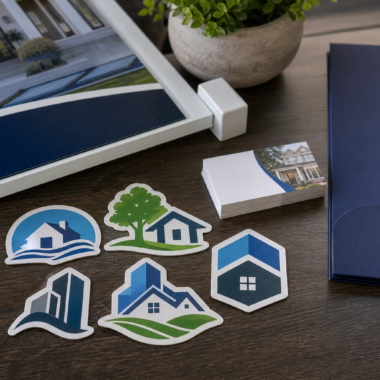
Economy Business Cards suit everyday handouts, listing appointments, and networking. The product is customizable and uses high-resolution digital printing on premium cardstock, with graphic design services available. Customizable business cards can help align everyday print collateral with a broader sign system.
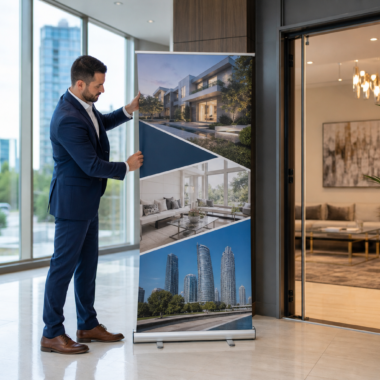
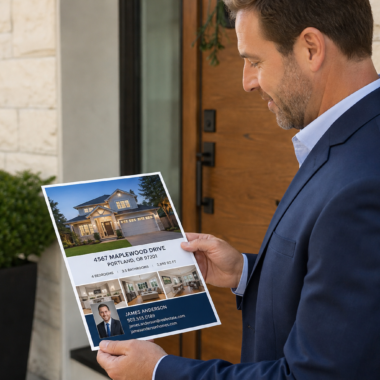
The same visual direction can extend to feature sheets, flyers, brochures, postcards, directional signs, riders, and roll-up banners, with each format adjusted for its reading situation.
Choose design decisions around the viewing situation
Design is not only a colour and font choice. The setting determines information density, type size, contrast, material, and finish.
For outdoor signs
Prioritize a short message, strong contrast, generous spacing, and a contact detail that can be found quickly. Avoid decorative script for essential information and keep important content away from edges.
Weather exposure affects production decisions. Weather-resistant construction and UV-resistant inks suit outdoor applications, while double-sided printing helps when people approach from more than one direction.
For indoor cards, brochures, and feature sheets
Indoor materials can carry more detail because readers can hold them closer. Use a clear headline, logical property facts, readable captions, and one obvious next step.
QR codes need sufficient size, contrast, and quiet space around them. Test the destination and scan the printed proof before approving a larger run.
Prepare the brief before design starts
A complete brief reduces back-and-forth and helps the designer fit the final product. Provide:
- Approved logo files and brokerage guidelines.
- Required colours, fonts, disclaimers, and brand wording.
- Agent names, titles, phone numbers, email addresses, websites, and social handles.
- Listing address, open house date and time, price, property facts, and required wording.
- High-resolution property photos and image preferences.
- The tested QR destination.
- Product type, dimensions, orientation, quantity, printed sides, material, finish, and display method.
- Pickup or delivery preference and required completion date.
Check sign information and business-card information separately. A sign may need an address, direction, or event time, while a card needs stable contact details.
What affects the cost of in-house design and printing?
There is no reliable single price because the quote combines design work with the physical order. Separate the cost into these decisions:
- Format and size: Cards, signs, banners, and brochures require different layouts and materials.
- Material: Outdoor or rigid products may require more durable construction.
- Quantity: Copy count changes the production total.
- Sides and finishing: Double-sided printing, soft-touch coating, special edges, or mounting affect the specification.
- Artwork complexity: A simple adaptation differs from building a layout around photos or missing brand assets.
- Revisions: Confirm what feedback and layout changes are included.
- Timing: A short deadline can limit product choices or require a different production plan.
The CAD 60 Small Open House Sign and CAD 85 Big Open House Sign are product examples, not design-fee benchmarks. Request the design scope, specifications, quantity, timing, and pickup or delivery arrangement together.
A consistent listing identity across several print pieces

Consider this hypothetical example: an agent launches a listing with a For Sale sign, open house sign, and business card using one approved logo position, two brand colours, one headline style, a consistent contact block, and the same QR destination.
The layouts are not identical. The For Sale sign prioritizes roadside recognition, the open house sign emphasizes the event and direction, and the business card keeps the agent’s name and contact details prominent.
An in-house team can adapt the system to each product while coordinating physical specifications. Final artwork still needs to follow applicable brokerage requirements and the details you approve.
Final proof and deadline checks
Before approving production, review the proof at the intended product size and orientation:
- Names, phone numbers, email addresses, URLs, and social handles are correct.
- Listing address, price, dates, times, and property facts are accurate.
- The QR code reaches the intended page and scans from the proof.
- Logo, colours, fonts, and brokerage wording are approved.
- Dimensions, orientation, sides, material, quantity, and finish match the order.
- Type is readable at the expected viewing distance.
- Important content has sufficient space from edges, folds, holes, or mounting areas.
- The production and pickup option fits the actual deadline.
Approval is the point to catch errors before production. If details change afterward, ask how the change affects artwork, cost, and schedule.
When in-house design is the practical choice
Choose in-house design when artwork is missing, several products need to look related, specifications are unfamiliar, or you want design and printing coordinated through one provider. Use self-serve editing or approved files when the layout is simple, the brand system is settled, and you can check production details confidently.
For a custom listing layout connected to a physical Realtor sign, Top Realtor Sign & Print offers custom Realtor signs with customizable artwork and professional design assistance.