Quick answer: which insert sign should you use for which listing
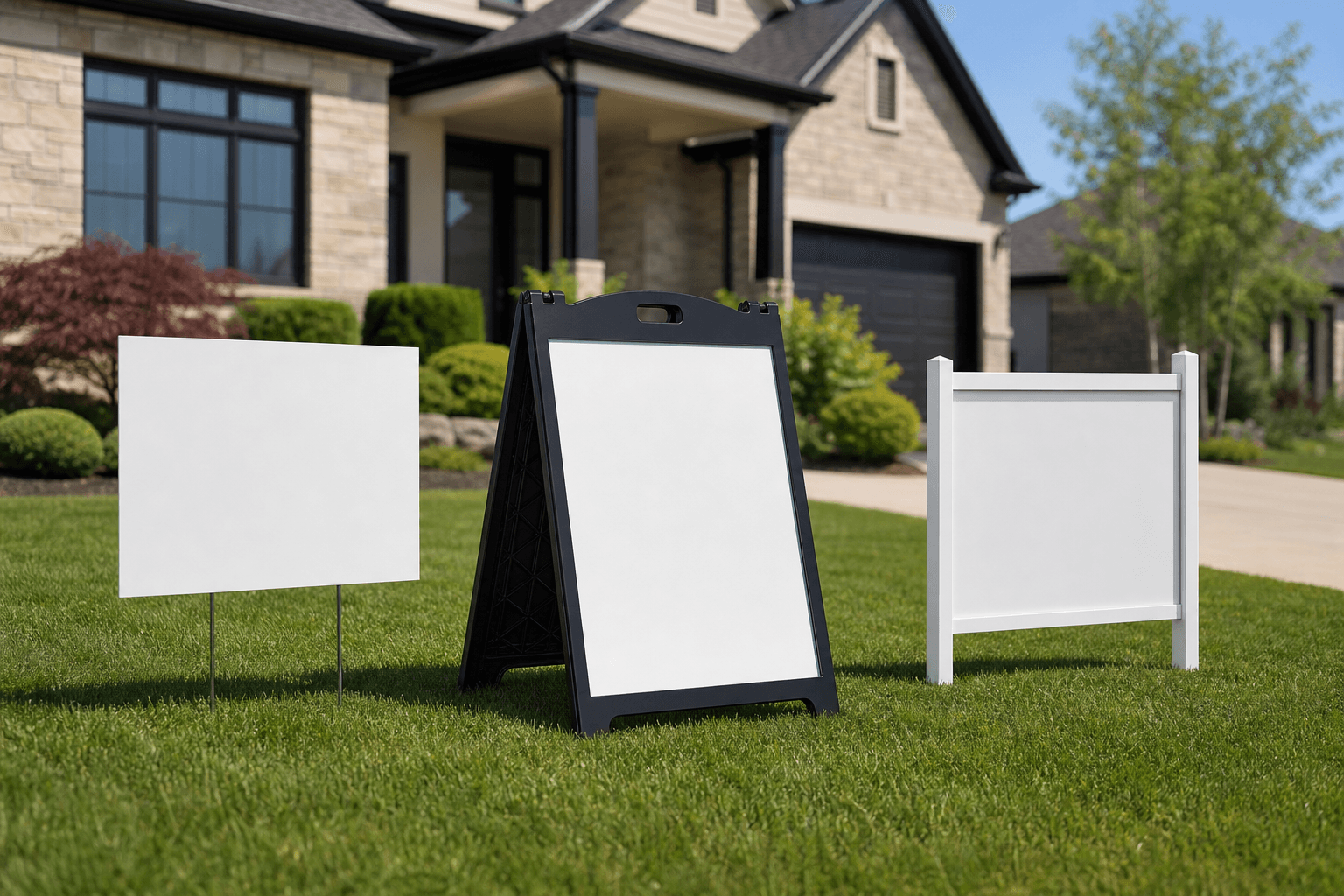
If you need one quick pick: go coroplast 18 x 24 for most short-term listings and directional signs, choose A-frame panels for busy open houses or high foot traffic, and use slide-in or snap-in framed inserts when you want a professional, reusable system for frequent turnovers or branded agency signage. Standard 18 x 24 inch panels printed double-sided balance visibility, portability, and cost. Industry buyer guides commonly recommend 18 x 24 for active listings and directional use when you want a readable, transportable panel (Custom Ink, AgentPrint).
How the main insert sign types compare
Below are the practical trade-offs agents consider when selecting insert signs for listings. Use these attributes to match the sign to the listing type, timeline, and neighbourhood rules.
- Material and durability, how long the sign will last in weather.
- Visibility and footprint, how readable the message is from the street.
- Portability and storage, how easy it is to move and reuse the sign.
- Cost to reuse, the price of replacement panels versus buying new signs each time.
- Setup time, how fast you can swap inserts before an open house.
Coroplast inserts
Coroplast is the most common substrate for insert signs, often offered in a 4 mm thickness for yard and rider use. Coroplast panels are lightweight, water resistant, and inexpensive to produce, which makes them the go-to option for temporary listings and directional signs. Coroplast riders and slide-in systems are standard for Ontario real estate signage because they combine affordability and ease of replacement. For a practical Ontario overview of coroplast riders, directional signs and A-frames, see the provincial sign guide (Niagara Stands Out).
A-frame inserts
A-frame or sandwich board inserts use panels inside a freestanding frame. They are the best choice for open houses in walkable neighbourhoods because they stand at pedestrian eye level, are easy to reposition on sidewalks, and can support larger, more graphic panels. A-frame panels are generally thicker and more robust than single coroplast riders, but they take more storage space and can be vulnerable in high wind unless weighted. For common yard sign formats and open house setups, see a buyer’s overview of yard sign use cases (Custom Ink).
Slide-in and snap-in systems
Slide-in or snap-in frames are a professional, reusable choice. They let you swap full-colour panels in seconds and keep the frame on a post or stand year after year. These systems are a good investment when your team regularly rotates listings or wants consistent, branded presentation across properties. Framed inserts protect the panel edges and often look more polished than loose coroplast. For notes on where coroplast inserts and framed riders fit with Ontario agent workflows, consult the Ontario signage overview (Niagara Stands Out).
Standard sizes, thicknesses and print specs agents should order
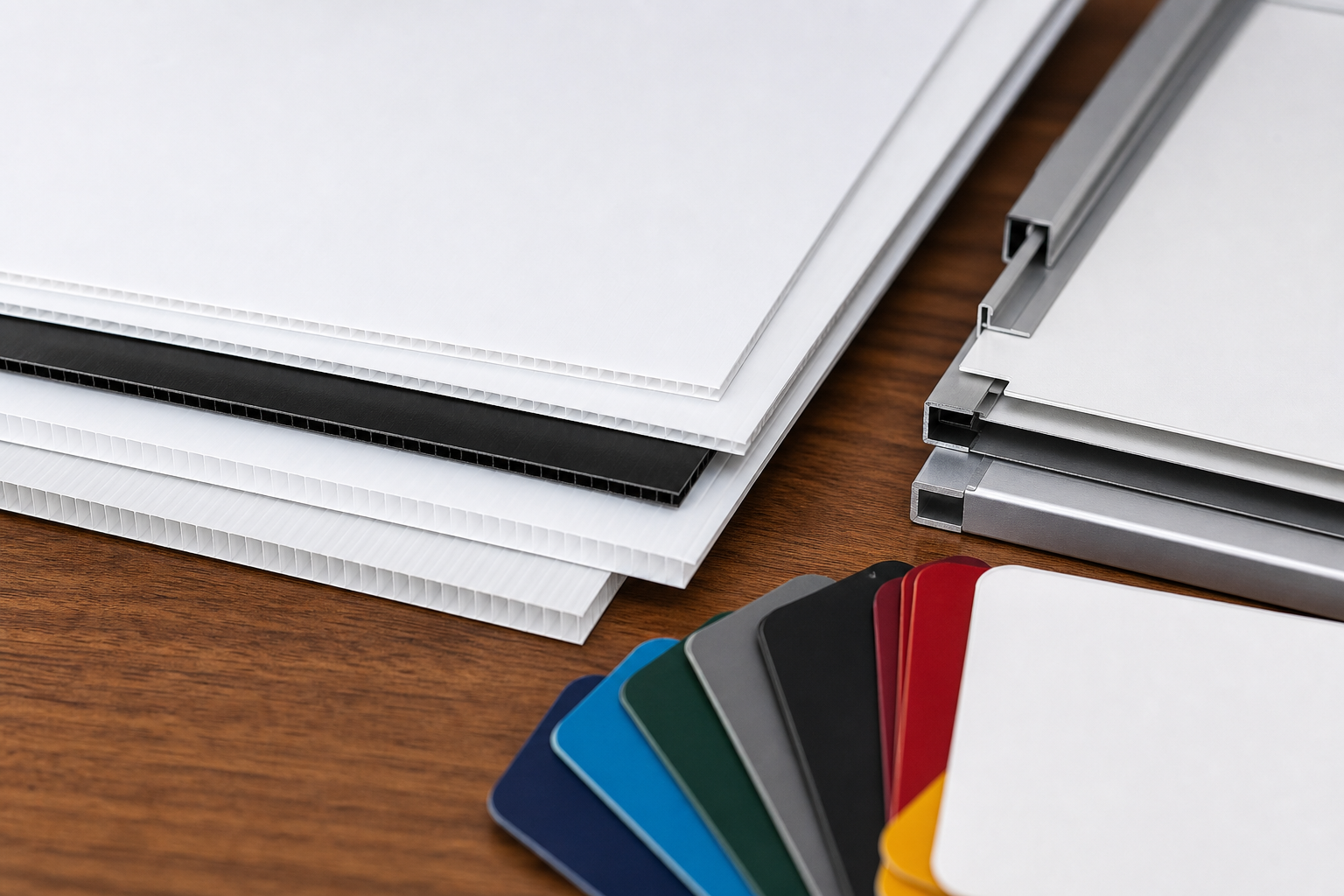
Order sizes that match common hardware and driver expectations to avoid custom fitting on site. The standard panel dimension for most insert signs in real estate is 18 x 24 inches, typically printed double-sided for listings that need visibility from both directions. Several industry resources list 18 x 24 as the default panel for active listings and directional signage, noting that this size balances transportability and readability (Custom Ink, AgentPrint).
Practical file and material rules to follow when you prepare artwork:
- Artwork size: 18 x 24 inches at 150 to 300 dpi, with crop marks and a 0.125 inch bleed.
- Safe area: keep important text and logos at least 0.5 inch from trim edges to avoid clipping.
- Material thickness: 4 mm coroplast is typical for short-term yard use. Thicker panels increase stiffness for A-frame applications.
- Double-sided printing: specify double-sided if you need faces visible from both directions; confirm if the printer will use white ink or mirrored artwork for best opacity.
When you order, include whether the panel is meant to be slide-in or attached to an H-frame, stake, or post. If you want matching hardware or compatible inserts, view compatible options in the shop’s for sale signs collection (for sale signs).
Design and messaging that work on listing inserts
Insert signs have a small visual window in which to deliver a single clear action. Follow these practical rules to make every sign count.
- One main message, for example For Sale or Open House, set in a bold sans serif at 120 point or larger for headline text on 18 x 24 panels.
- High contrast, light text on dark backgrounds or dark text on light backgrounds improves legibility at distance.
- Minimal contact details, use a short URL or a single phone number and avoid listing multiple phone lines that clutter the sign.
- Brokerage compliance, place required brokerage logos and registration numbers where they are visible but secondary to the primary CTA.
- Directional clarity, for arrow or directional panels, use a plain arrow, short copy such as Open House 2-4 PM, and a consistent colour system so drivers recognise your directional chain.
Industry guides recommend coordinated sets for open houses: a main sign near the property and a set of directional signs at decision points along the route. Coordinated directional chains increase the chance people find the property and reduce driver hesitation (Custom Ink).
Mississauga and Ontario placement rules to check before you install
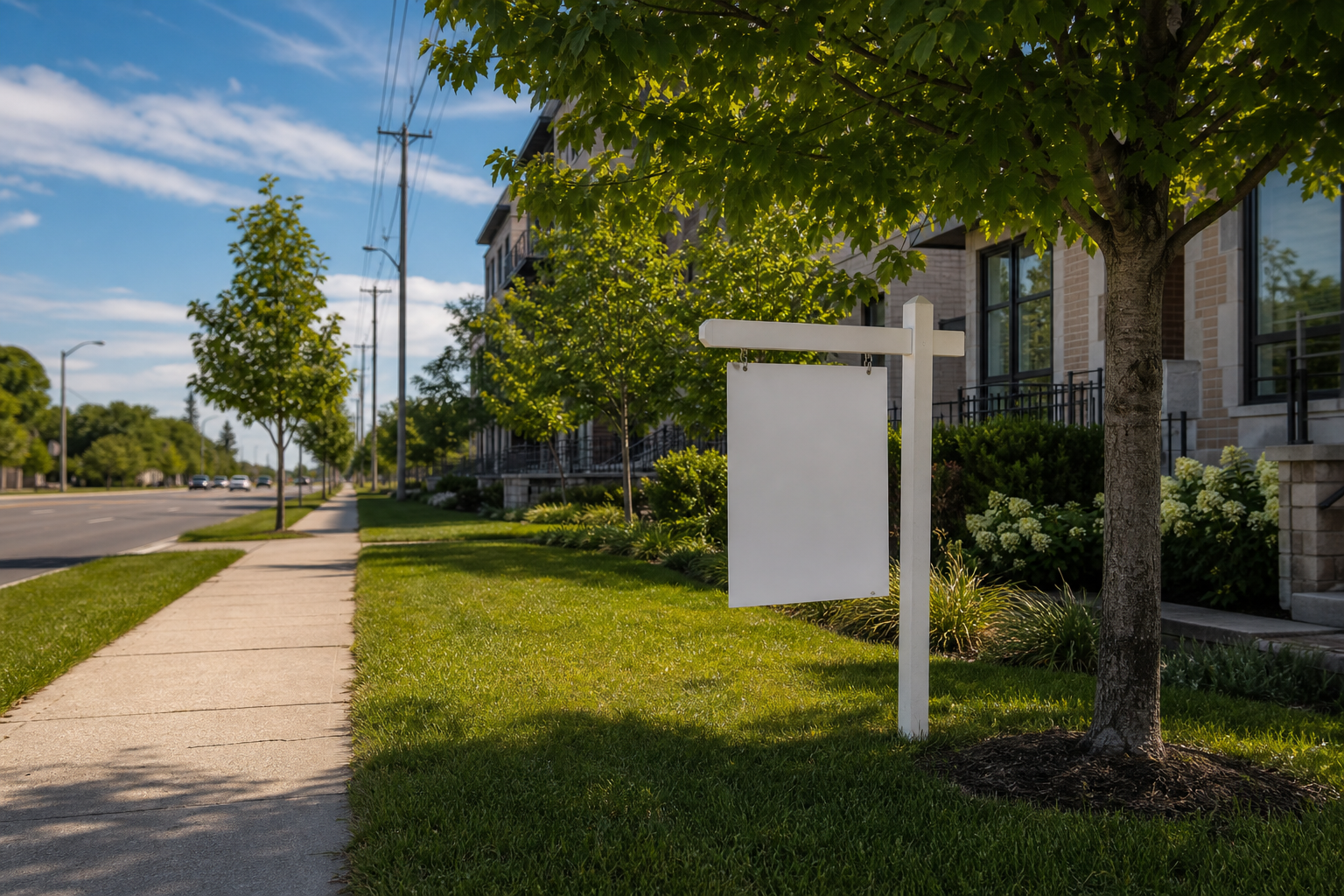
Municipal by-laws often govern where signs may be placed and whether directional signs are allowed on public property. Before you install inserts on boulevards or attach directional panels to municipal poles, check the local by-law for the specific city or town. Ontario sign guidance warns agents to confirm directional sign placement rules because restrictions and permit requirements vary municipality by municipality. For an overview of how riders, directional signs, and A-frames are treated and to learn typical restrictions, review the Ontario sign guide (Niagara Stands Out).
How to order fast: file checklist, swap-ready panels and same-day pickup options
If you are working to a tight timeline, follow this rapid ordering checklist to avoid delays and ensure the printer can meet same-day pickup or quick turnaround.
- Have vector logos and high-resolution photos ready in EPS, PDF, or high-res PNG. Convert fonts to outlines or embed them.
- Export as print-ready PDF with bleed and crop marks. Confirm colour mode is CMYK, not RGB.
- Specify panel type, size (for example 18 x 24), material thickness, and whether you need double-sided printing.
- Mention mounting preference: H-frame stake, slide-in frame, or A-frame panel so the shop can confirm compatibility.
- If you need help, ask for in-house design support to speed the process and reduce rework. Local shops often offer quick edits and proofing to keep deadlines on track.
Top Realtor Shop advertises local, Mississauga-based service with same-day pickup on select items and in-house design support, which can help when you need to turn a listing sign around quickly. See compatible signs and hardware in the for sale signs collection or contact Top Realtor Sign & Print for details.
Decision checklist and answers to common objections
- Budget, if cost is the main limit, use coroplast single panels and replace panels by listing rather than buying frames.
- Need for permanence, if the sign will stay on display year round, choose a framed or aluminium post system rather than coroplast alone.
- Frequent turnover, if you rotate listings weekly, invest in slide-in frames to save time and reduce long-term cost.
- Wind and weather, use thicker panels, weighted A-frames, or secure mounting to prevent blow-aways in windy areas.
- Municipal risk, always check local sign rules before installing directional stakes on public property to avoid fines or removal.
Frequently asked questions
What size insert signs for listings should I order for a standard yard sign
Order 18 x 24 inches as the default for most active listings and directional panels. This size is the industry standard for yard signs because it is large enough to read from a short distance yet small enough to transport and store. For references on standard sizes and recommended double-sided prints, see yard sign buyer guidance (Custom Ink, AgentPrint).
Is coroplast weatherproof enough for winter listings in Ontario
Coroplast is water resistant and performs well in wet conditions, but extreme cold and wind can make thinner panels more brittle. For winter listings, choose a thicker coroplast panel or use framed or aluminium-backed signs for longer life. If you expect prolonged exposure, discuss thicker materials or post-mounted aluminium options with your printer or sign shop.
Can I use slide-in inserts on municipal boulevards and directional placements
You can use slide-in inserts where permitted, but municipal rules vary. Many Ontario municipalities restrict signs on boulevards or require permits for directional signs. Check your local by-law before placing signs on public property to avoid removal. Review Ontario signage guidance for typical restrictions and best practices (Niagara Stands Out).
How do I prepare print files to get same-day pickup for an insert sign
Prepare a print-ready PDF in CMYK with crop marks and 0.125 inch bleed, include outlined fonts, and supply any logos as vector artwork. Confirm with the shop whether double-sided printing is required and name the mounting type. If you need design help, request in-house edits to avoid back-and-forth. Local shops with same-day pickup options can advise whether your files meet production requirements.
Are double-sided inserts worth the extra cost for open houses
Yes, double-sided inserts increase visibility from both directions and are generally worth the extra cost for open houses and main listing signs. If directional inserts point a single way, single-sided panels can be adequate, but for property-facing signs double-sided printing improves the chance a passerby will read the message.
Ready to order panels or talk through options? For matching hardware and compatible panels, browse the for sale signs collection and contact Top Realtor Sign & Print for local pickup, fast turnaround, and in-house design support.