Buyer guide for real estate sign riders
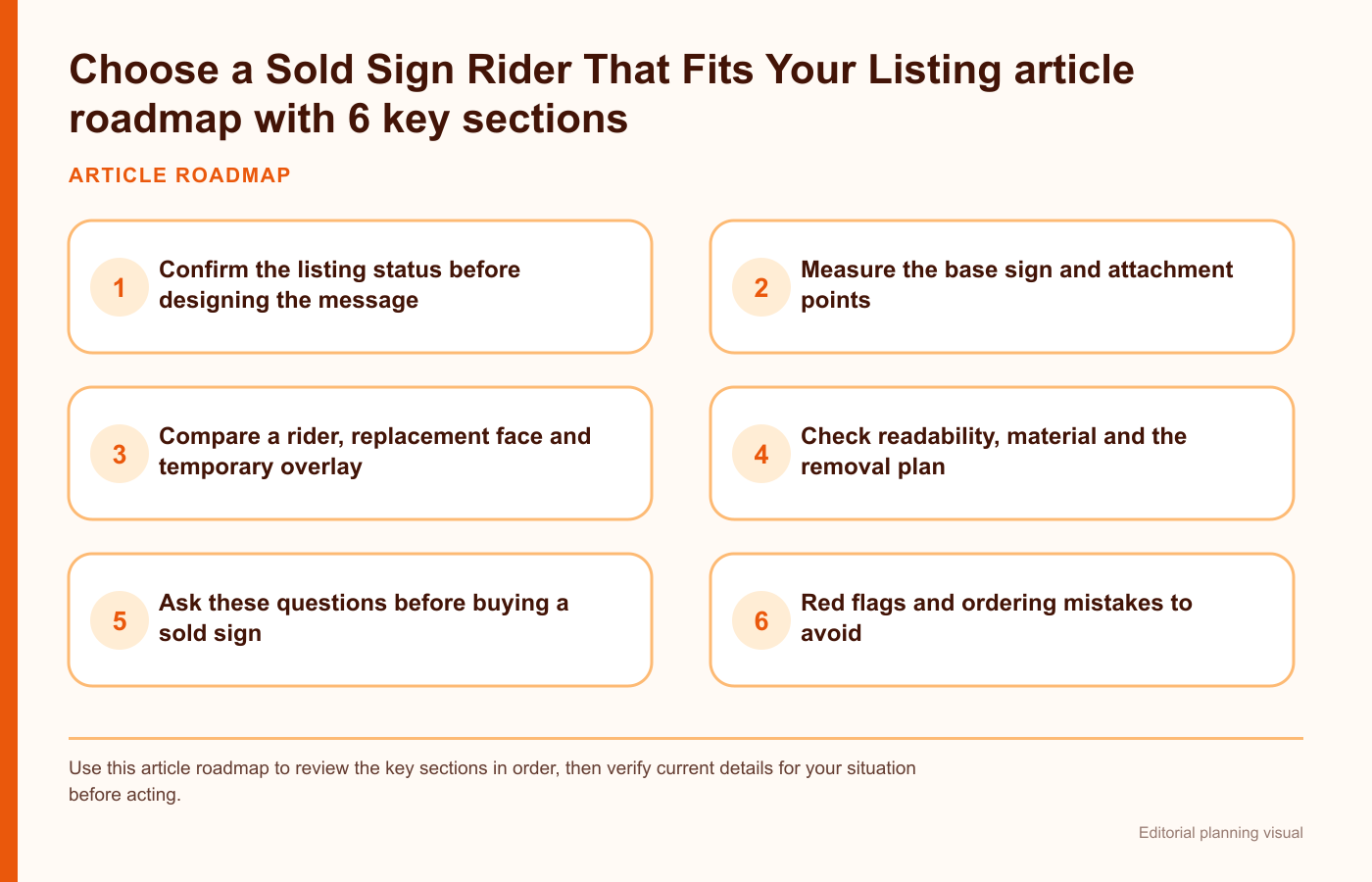
Choose a Sold Sign Rider That Fits Your Listing
A sold sign rider is small, but it carries a precise public message. The right choice must fit the existing sign, remain readable, attach safely and reflect a status the seller and brokerage are authorized to advertise.
Confirm the listing status before designing the message
The first decision is not colour or size. It is whether “sold,” “sold conditional,” another approved phrase or no status message is accurate and authorized at that moment. Those phrases are not interchangeable. Brokerage policy, board rules, seller consent and the terms of the transaction may affect what can be displayed and when. The person ordering the print should obtain the approved wording through the brokerage’s current review process.
Ontario’s real estate regulator has a specific bulletin on advertising sold property. It describes consent and information obligations, including limits on exposing agreement contents without the required written consent. A lawn sign is public advertising, so a compact rider should receive the same status and privacy check as a web or social post.
Use a simple approval record: property identifier for internal use, approved public wording, approving person, approval date, install trigger and removal trigger. Keep private transaction information out of the artwork. If the status changes or the transaction does not proceed as expected, stop and replace or remove the rider promptly rather than letting a stale message remain.
Measure the base sign and attachment points
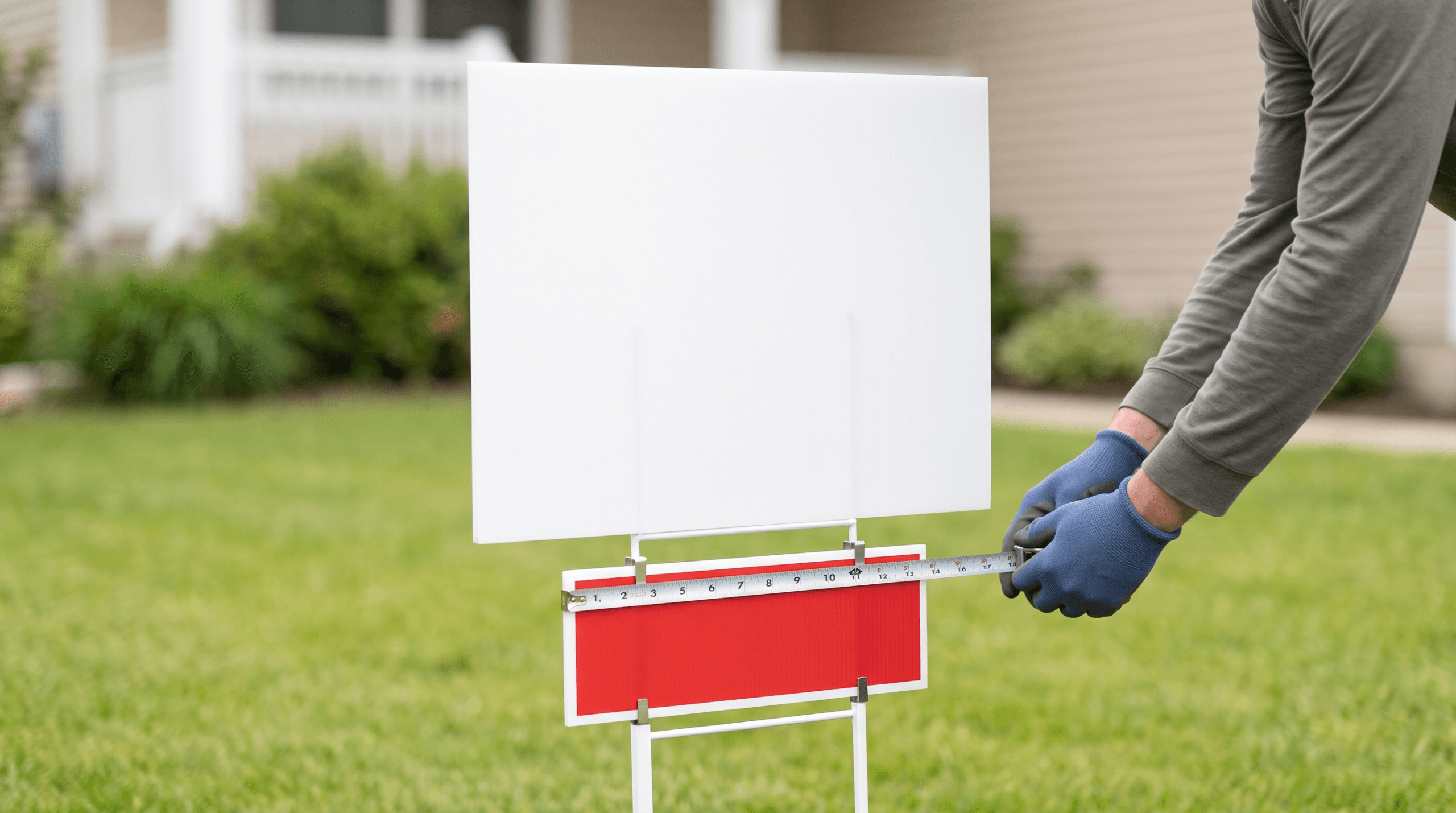
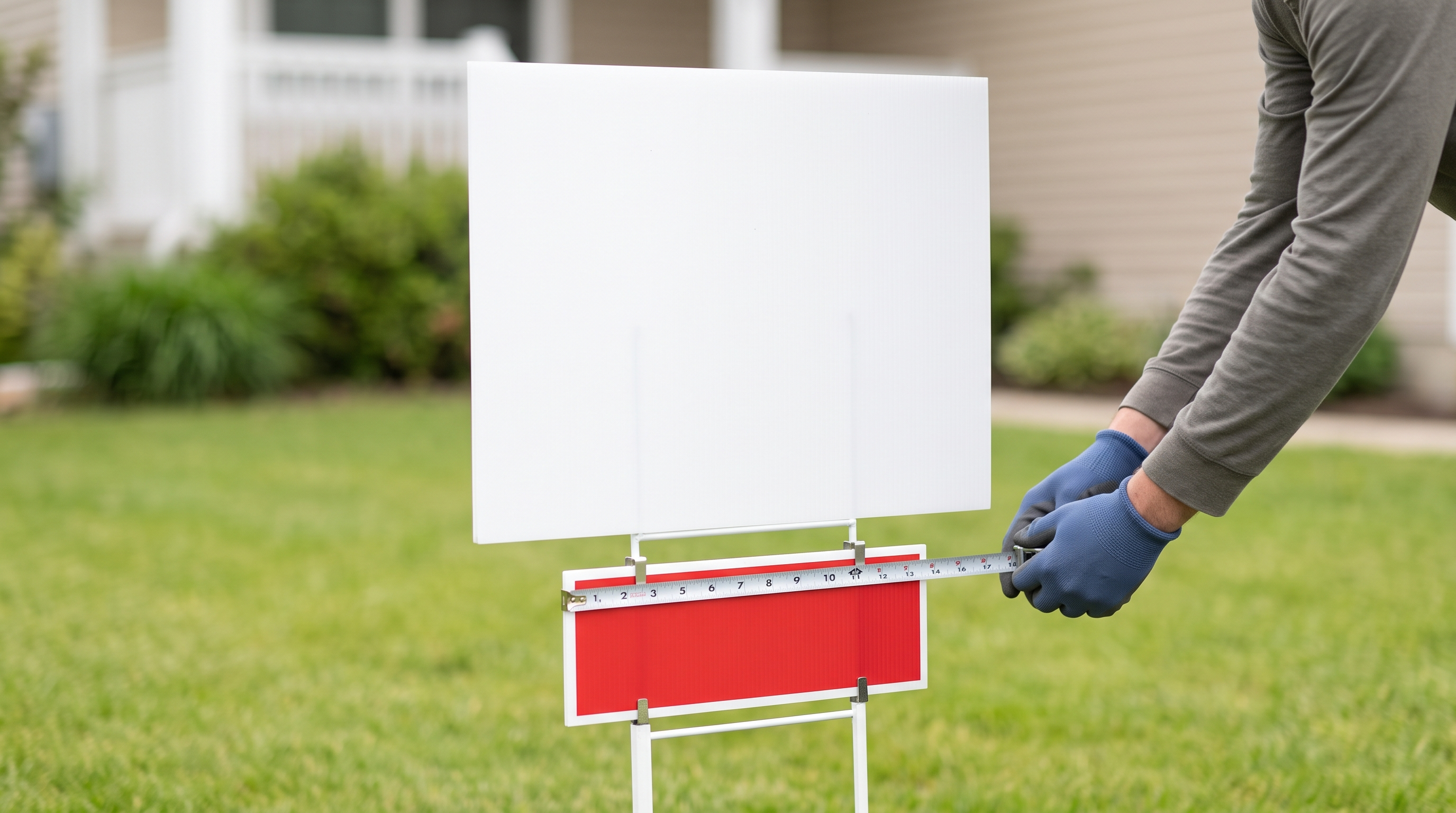
Do not order from memory or assume every brokerage panel uses one standard rider. Measure the visible width and height, the distance between holes or grommets, the edge clearance and the available space above or below the base panel. Photograph the front, back and attachment hardware without showing an address or client information. Note whether the frame accepts a hanging panel, a top rider, clips or another approved method.
- Measure the base sign face and the clear space where the rider will sit.
- Measure attachment centres, not just the outside width.
- Record the current hardware type and whether the frame is level and sound.
- Check that the rider will not cover the brokerage name or required identifiers.
- Confirm who is authorized to install, alter and remove the sign on the property.
If a rider swings below a panel, consider clearance, nearby planting and the chance of contact with the post or ground. If it mounts above, consider overall height, wind exposure and whether the frame was designed for the added component. The sign printer can help with product fit, but the property owner, brokerage and installer still need to confirm placement and authorization.
Compare a rider, replacement face and temporary overlay
| Format | Potential fit | Trade-off to check | Useful buying question |
|---|---|---|---|
| Add-on rider | Base sign stays in place and has compatible mounting points | Added wind load, movement, hole spacing and clearance | Can you match these measured attachment centres? |
| Replacement sign face | Most of the message or visual hierarchy needs to change | More handling and a need to store or retire the old face | Will this fit the existing frame without hiding required information? |
| Compatible overlay | Very short use on a smooth, approved substrate | Adhesion, residue, surface damage, wrinkles and reduced readability | Is the material removable from this exact substrate and exposure? |
A rider makes the status change visually distinct while preserving the original sign. That can also make removal easier. A replacement face provides more design control but may be unnecessary if only one status line changes. An overlay can look economical, yet it is not universal: cold, moisture, texture, previous coatings and unknown plastics can affect adhesion and removal. Ask for substrate-specific advice and test where damage would not compromise the main sign.
Check readability, material and the removal plan
A rider should communicate one approved message quickly. Keep the wording short, create strong colour contrast and give letters enough height and spacing for the expected viewing distance. Avoid squeezing phone numbers, claims and secondary messages into a small status panel. The base sign already handles identity and contact information; the rider’s job is status.
Ask how the proposed print and substrate respond to the actual use conditions: outdoor exposure, moisture, temperature changes, movement and cleaning. Do not turn a material description into a lifetime promise. Expected display time, local weather, edge finishing, ink system, attachment and storage all affect performance. Inspect the piece on arrival for spelling, colour, hole placement, sharp edges and surface damage before it goes to the property.
Plan removal at the same time as installation. Mississauga’s current consolidated Sign By-law, for example, includes rules for real estate signs and a specific removal period for sold signs. Other municipalities may define different time limits, locations, dimensions or sign types. Verify the current rule where the property sits; do not apply a Mississauga example across Ontario.
Label reusable riders on the back with a non-public inventory code rather than a property address. After removal, clean them using a method suitable for the printed surface, inspect holes and edges, and store them flat so the next installation starts with a fit check rather than an assumption.
Ask these questions before buying a sold sign
- Wording: Can the printer reproduce the brokerage-approved phrase exactly, including capitalization and bilingual requirements if any?
- Dimensions: Is the quote based on finished size and measured hole centres?
- Proof: Will a digital proof show final wording, crop, colour intent and grommet or hole positions?
- Compatibility: What sign material, frame and mounting method is the rider designed to fit?
- Production: What must be confirmed before a current price or turnaround is reliable?
- Installation: Who supplies hardware, and does the chosen method need a qualified installer or brokerage-approved vendor?
- Removal: Can the rider be removed without damaging the base sign, and how should it be stored?
- Reprint: What happens if the approved wording changes after proof approval?
Top Realtor Sign & Print maintains an owned page for for-sale signs and another for custom riders. Use those pages to identify available product directions, then confirm current dimensions, materials, proof steps, pricing and production timing for the exact order. Website examples are a starting point, not evidence that a particular rider fits a frame in the field.
Red flags and ordering mistakes to avoid
- Printing before status approval. A fast rider with the wrong public message creates a bigger problem than a delayed install.
- Using only nominal dimensions. Two signs described as the same size may have different holes, frames or clearances.
- Hiding required identification. A rider should not cover the brokerage name or other information that must remain visible.
- Assuming one city’s rule applies everywhere. Check the municipality and property before placement.
- Overloading the design. One readable status message is more effective than several tiny claims.
- No removal owner. Assign a person and trigger for removal when the status or permitted display period changes.
- Installing damaged hardware. If the frame, post or attachment is loose, stop and arrange the appropriate repair rather than adding another panel.
Frequently asked questions
Does a sold rider mean the transaction has closed?
Not necessarily. Public wording must match the transaction’s accurate, authorized status and the brokerage’s process. Do not infer “closed,” price or agreement terms from a generic status rider.
Can the same rider be reused?
Potentially, if the wording remains approved, the dimensions and attachment method fit, and the panel is still legible and undamaged. Reconfirm municipal timing and brokerage requirements for every property.
Should the rider include the sold price?
That is not simply a design choice. RECO guidance discusses consent and disclosure around sold-property advertising. Check the current regulatory and brokerage requirements and obtain any required written consent before including transaction information.
Prepare a decision-ready order
Before contacting the printer, gather the approved wording, a privacy-safe photo of the sign, finished-size measurements, attachment centres, desired display conditions and the date or event that triggers removal. If the base sign is faded or the frame no longer fits the intended layout, review the sign-refacing option instead of forcing a rider onto an unsuitable base.
Use the Top Realtor Sign & Print contact page to request a current fit and proof discussion. Confirm all product, price and production details directly before approving artwork. The best order is the one that communicates an authorized status clearly and can be installed and removed as planned.
General buying information only, not legal or regulatory advice. Real estate advertising, sign placement and removal rules depend on the property, brokerage, municipality and current requirements.