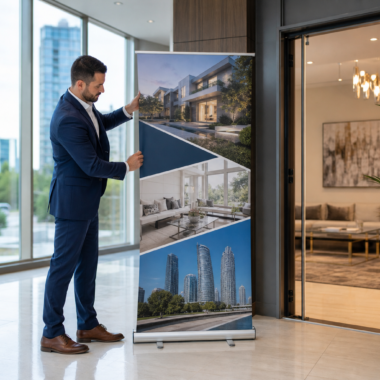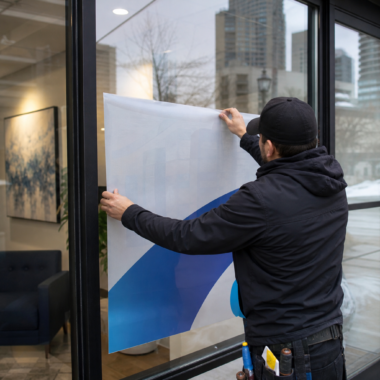
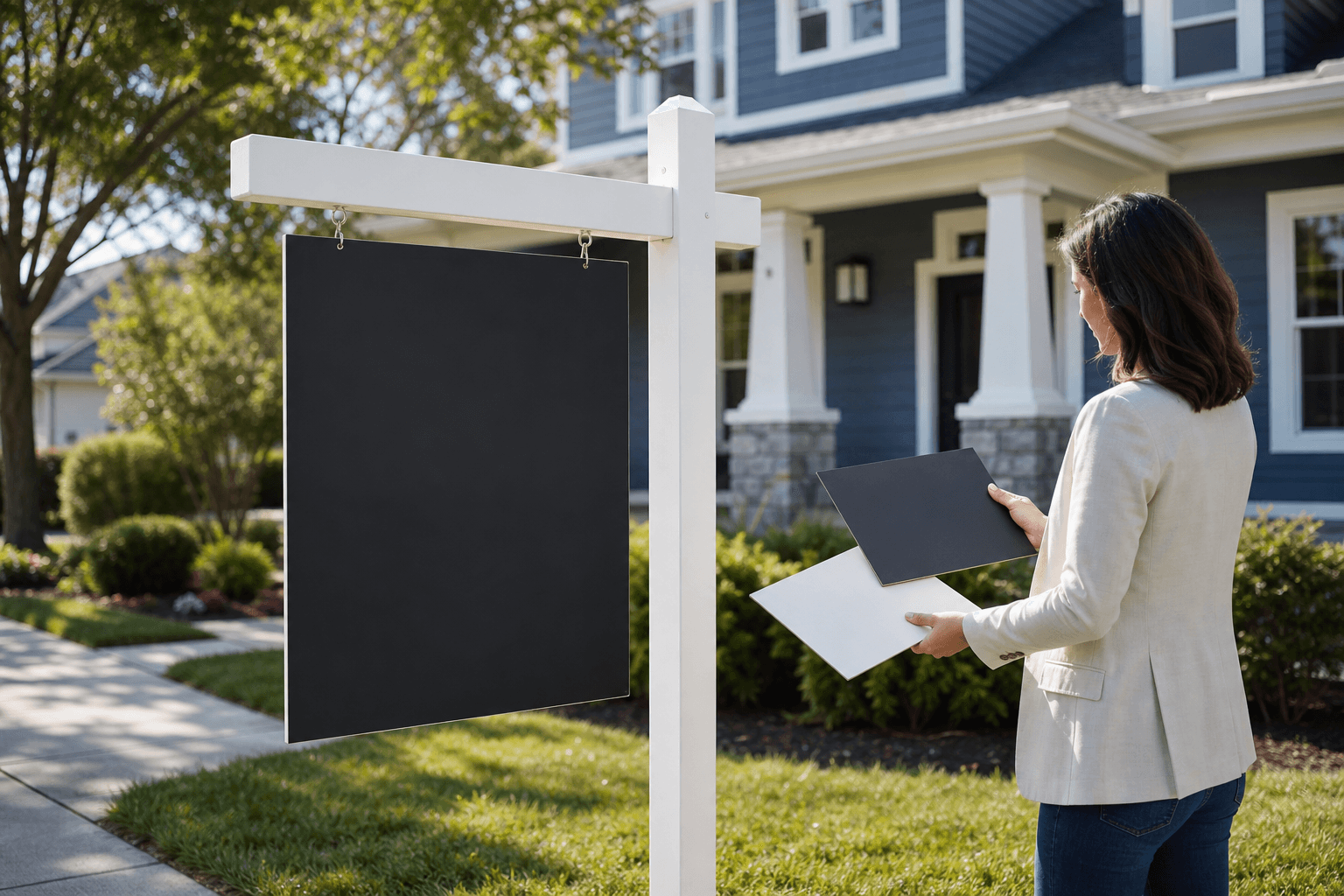
Custom For Sale signs are one of the fastest ways to brand a listing, communicate contact details, and catch drive-by attention. This guide walks through the exact decisions you should make before you order so the sign performs in Ontario conditions, matches brokerage rules, and arrives on time for showings or open houses. Use the quick checklist first, then follow the six steps below.
Quick checklist: must‑decide items before you order
Complete these items before you call a sign shop or upload artwork. Having the answers on hand avoids reprints and delays.
- Installation location: front lawn, balcony, building facade, or gated complex.
- Viewing distance: curbside traffic, sidewalk, or highway-facing.
- Primary substrate preference: low-cost temporary or durable long-term.
- Mounting method: H-stake, U-channel, wood post, wall bracket, or rider plate.
- Brokerage branding rules and required logos or disclaimers.
- Artwork source: you will supply print-ready file, use the online editor, or request in-house design.
- Deadline: delivery, same-day pickup, or scheduled installation date.
If you already know you want a ready-to-order option, browse the store’s for sale signs or the homepage to review packages and finishes.
Step 1: choose the right material for Ontario weather and lifespan
Material determines how a sign looks, how long it lasts, and how much it costs. Match the material to exposure, budget, and expected use.
- Corrugated plastic (coroplast): Lightweight, economical and common for lawn signs with H-stakes. Good for short-term listings and winter storage. Coroplast is economical but will degrade faster under UV and repeated freeze–thaw than rigid options.
- Aluminium composite panel: Rigid, flat, and weather resistant. Best for long-term, premium presentation or high-wind locations because it resists warping and holds colour longer.
- PVC foam board: Mid-range cost, solid and relatively lightweight. Good for medium-term use where you want a cleaner edge than coroplast but do not need full aluminium durability.
- Aluminium sheet: Top choice for permanent exterior signs. It is the most durable and holds up against Ontario winters, but its cost is higher and mounting requires more robust hardware.
Material choice affects lifespan and appearance substantially, so pick weather‑resistant substrates for outdoor use. For a detailed discussion of material tradeoffs and installation, see the custom signs guide on materials and installation.
Helpful reference: How materials affect a sign’s lifespan and installation details are described in an industry guide on custom signs and installation: Custom Signs Guide 2026: Materials, Design & Installation.
Step 2: pick size, layout and fonts for street‑level legibility
Legibility beats decoration. Design your sign so the most important information reads first at typical viewing distances.
- Prioritise information: Listing status (For Sale), agent name, and phone number should be most prominent. Secondary items can include brokerage logo, email, and QR code.
- Type size: Increase font size as viewing distance grows. Headline type should be bold and simple; avoid script and narrow display fonts for primary contact details.
- Contrast and colour: Use high contrast between text and background to help readability in rain and low light. Avoid busy photographic backgrounds behind small text.
- Safe margins: Leave clear space around text so it is not lost to frame, mounting holes, or weather stripping. Include at least a 10 mm margin on smaller signs and greater on larger panels.
A well-planned sign system considers legibility, scale and environmental noise so the sign performs before a conversation begins; these principles are outlined in a buyer’s checklist for custom business signs: How to plan custom business signs.
Step 3: mounting and installation options plus permit checks

Choose a mounting method that suits the property surface and the landlord or municipality rules.
- H-stakes: Common for coroplast lawn signs. Insert the stake into the ground; good for short-term lawn placements. Not suitable for concrete or high-wind sites without reinforcement.
- U-channel or wood post: More stable for larger boards or windy locations. Often used with aluminium composite panels for residential or commercial front yards.
- Wall mounts and bracket kits: Use for facades, balconies, or where ground mounting is not allowed. Requires drilling and landlord approval.
- Rider plates and multi-panel systems: Attach to a primary post to add directional signs, open house riders, or sold banners.
Before installation always check with the municipality, condo board, or landlord regarding sign placement and permits. Industry guidance recommends asking your sign shop about code compliance, recommended materials, and mounting hardware before you buy: 10 questions to ask a sign shop.
Step 4: finishes, protective coatings and maintenance expectations
If a sign will live outdoors for months, finish choices are important.
- UV-stable inks: Specify UV-resistant inks or pigments for outdoor printing so colours fade slower over the summer and winter cycles.
- Protective laminate: A clear laminate protects printed surfaces from abrasion, graffiti and weather. It is recommended for coroplast and PVC used in exposed locations.
- Edge sealing and mechanical fasteners: Sealing edges on foam and coroplast helps prevent moisture ingress; choose stainless steel or coated hardware for longevity.
- Maintenance: Wipe with a mild detergent and soft cloth after heavy pollen, salt or winter slush. Inspect mounting hardware quarterly during active listing seasons.
These finish steps reduce premature failure and keep colours accurate through Ontario weather cycles.
Step 5: artwork, file specs and brokerage branding rules
Correct artwork avoids reprints. Prepare or request these items:
- File type: supply vector PDF or high-resolution TIFF/PNG at the final print size, CMYK colour mode where possible.
- Bleed and safe area: include at least 3 mm bleed for small signs and proportionally larger bleeds for large-format prints; leave a safety margin for critical text.
- Fonts: supply fonts or convert text to outlines to avoid substitution during printing.
- Minimum font sizes: ensure phone numbers and agent names are legible from the expected viewing distance; ask the supplier for suggested point sizes based on sign size.
- Brokerage compliance: follow franchise logo usage and mandatory legal statements. Share the brand guide with your sign shop so they can proof against brokerage standards.
If you do not have print-ready artwork, the shop’s online editor and in-house design services can prepare files to meet these specs. Top Realtor Sign & Print offers a browser-based online design tool and in-house graphic design to help agents create or adjust artwork without professional software, which can speed turnarounds and ensure brokerage compliance.
Step 6: timeline, same‑day pickup and realtor package options

Decide how quickly you need the sign and whether a bundled package simplifies repeat orders.
- Urgent deadlines: Confirm same-day or next-day pickup availability before you commit. Some shops advertise same-day pickup for business cards and flyers, and local suppliers may offer accelerated options for simple signs; verify current capacity when you call.
- Realtor packages: Bundled packages containing For Sale signs, riders and printed collateral reduce administrative repeats. Consider a Bronze-to-Platinum package if you list frequently and want predictable pricing.
- Proofing: Ask for a digital proof and, when possible, a printed sample for premium or large-format signs to confirm colours and legibility before final production.
Top Realtor Sign & Print advertises same-day pickup on selected products and offers Realtor packages and fast local turnaround from its Mississauga location. Use the online category page to compare sample options for For Sale signs and related bundles.
What to ask your sign shop and how to decide between tradeoffs
Before you sign off, ask these practical supplier questions and use the decision rules below to choose the best option.
- Can you recommend a substrate for my location and expected exposure?
- What proofing process do you provide, and is a printed sample available for large signs?
- Do you install, or only supply hardware and instructions?
- What are lead times for production and installation, and do you offer same-day pickup for signs?
- Are warranties or guarantees offered for materials and colour fade?
- What file formats do you accept, and can you handle brokerage logo compliance?
These questions are based on common buyer guidance for sign shops; asking them helps avoid surprises at delivery and installation.
Decision rules for three common agent scenarios
- Low-cost short-term listing: Choose coroplast with H-stake, UV-stable inks and laminate. This keeps cost low but accept a shorter usable life.
- Premium presentation: Use aluminium composite or aluminium sheet with professional mounting and a protective finish. Invest in in-house design to polish brand assets and request a printed proof.
- Multi-listing repeat orders: Buy a durable substrate for the long term or create a reusable post system with interchangeable rider plates. Consider a Realtor package to reduce per-item cost and simplify reordering.
Frequently asked questions
How long do custom For Sale signs typically last in Ontario?
Longevity depends on material and exposure. Corrugated plastic may last one to two seasons when stored correctly, while aluminium-based panels can last several years with proper mounting and UV-resistant inks. Material choice is the main factor affecting lifespan.
Do I need a permit or condo board approval to place a For Sale sign in Mississauga?
Permit and board rules vary. Always check with the local municipality, condo board or landlord before installing a sign. A sign shop can advise on common municipal practices, but final authority rests with the local governing body or property manager.
What file formats and dimensions should I provide for a For Sale sign?
Provide vector PDF or high-resolution TIFF/PNG at final print size in CMYK. Include bleed and convert fonts to outlines where possible. If you are unsure, request the shop’s artwork template and use the online design tool or in-house design service.
Can I get same‑day pickup for a For Sale sign in Mississauga?
Same-day pickup is possible for small items at some local shops, but it depends on current production capacity and sign complexity. Confirm availability with the supplier before ordering. Top Realtor Sign & Print advertises same-day pickup options for selected products and fast local turnaround.
Which material is best for temporary lawn For Sale signs versus long‑term installed signs?
Use coroplast with H-stakes for temporary lawn signs. For long-term installed signs choose aluminium composite or aluminium sheet with durable mounting hardware and protective finishes.
Final steps and where to order
Run the quick checklist again, prepare artwork or request design help, and call a local shop with your timeline and mounting details. If you want a local Mississauga partner that offers in-house design, an online editor and Realtor packages with fast pickup options, consider reviewing the for sale signs category and the main site for package details.
Ready to order or need a proofed design? Contact Top Realtor Sign & Print to review substrates, proofs and same-day pickup options for your next listing.