A Practical Guide to Sign Printing Services
Whether you need a storefront banner, directional wayfinding, real estate signage, or event displays, sign printing services turn concepts into durable, visible communication. This guide walks you through the essentials—from choosing the right type of sign and materials to preparing production-ready files, planning installation, and maintaining your investment. Use the checklists and questions throughout to confidently navigate proposals and proofs with any provider.
What sign printing services cover
Most sign printing services can be grouped into a few core categories. Understanding each one will help you match the right product to your goal, environment, and budget.
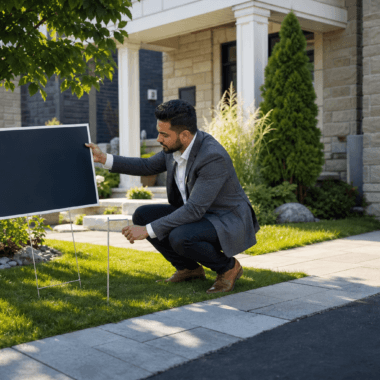
- Temporary and event signage: Yard signs, A-frames, foam board displays, step-and-repeat backdrops, and vinyl banners for promotions and short-term wayfinding.
- Outdoor permanent or semi-permanent signs: Rigid panels, post-and-panel, aluminum composite (ACM), PVC, corrugated plastic, and site boards intended to endure the elements.
- Indoor branding and information: Wall graphics, window decals, floor graphics, lobby signs, directional placards, and safety notices.
- Portable displays: Retractable/roll-up banners, tabletop displays, pop-up booths, and feather flags for events and trade shows.
- Specialty additions: Sign riders, interchangeable inserts, reflective or glow-in-the-dark materials, and contour-cut decals tailored to niche uses.
Beyond fabrication, many providers also offer prepress support (file checks, color guidance), basic layout assistance, and hardware (stakes, grommets, frames) to make installation easier.
Choose by goal and environment
Start with where and how the sign will work. The answers below quickly narrow options and help you ask the right questions.
- Primary goal: Awareness (large banner), wayfinding (directional arrows), detailed info (indoor board), or conversion (call-to-action near point of decision).
- Viewing distance: Close (2–6 ft), medium (6–25 ft), or far (25+ ft). This affects type size, contrast, and material thickness.
- Lighting: Bright sun, mixed daylight, or dim interiors. Consider matte vs. gloss, anti-glare laminates, or backlit films for illuminated boxes.
- Exposure: Wind, rain, freeze/thaw cycles, or high foot traffic. Choose reinforced hems, pole pockets, heavier substrates, or protective lamination accordingly.
- Duration: Hours to days (temporary), weeks to months (campaign), or a year+ (long-term). Match durability to timeline to avoid over- or under-spending.
- Mounting surface: Grass/soil, concrete, drywall, glass, or fencing. Confirm compatible hardware (stakes, tapcons, VHB tape, suction cups, zip ties).
- Portability: Will you move it often? Retractable banners, A-frames, and lightweight corrugated plastic excel for frequent transport.
Materials and durability: a practical comparison
Common sign substrates vary in weight, rigidity, print quality, and longevity. Use this quick guide to align needs with materials.
- Corrugated plastic (coroplast): Lightweight and economical for yard signs, riders, and short- to medium-term outdoor use. Accepts H-stakes; good for volume campaigns.
- PVC (sintra/foam PVC): Smooth, rigid plastic common for indoor wall signs and short-term outdoor boards. Offers crisp print surfaces.
- Foam board (foamcore/gatorboard): Excellent for indoor presentations and retail displays. Not weatherproof.
- Aluminum composite (ACM/Dibond): Aluminum skins with a composite core. Durable, dimensionally stable, and attractive for exterior or long-term interior signs.
- Solid aluminum: Metal plates for regulatory, parking, and facility signage. Strong and corrosion-resistant options exist.
- Cardstock/poster paper: Cost-effective for indoor posters and temporary window displays; pair with frames or stands.
- Self-adhesive vinyl: Versatile for decals, window graphics, vehicles, and walls. Choose removable, permanent, or specialty adhesives.
- Banner vinyl and mesh: Flexible, rollable materials. Mesh reduces wind load; solid vinyl suits most outdoor banners when reinforced.
Ask your vendor about finish options such as matte or gloss lamination, UV inks, and edge reinforcement to match weather and handling conditions.
Design essentials for readability
Clarity beats cleverness at a distance. These guidelines help ensure your message is seen and understood quickly.
- Hierarchy first: One primary message (e.g., headline or call-to-action), one secondary, and supporting details only if legible at the intended distance.
- Contrast and color: High contrast pairings (dark on light or light on dark) boost legibility. Avoid thin scripts for long-view signs.
- Type sizing by distance: As a working rule, increase letter height as viewing distance grows. When in doubt, size up.
- Whitespace: Generous margins and spacing increase readability more than cramming extra words.
- Call-to-action placement: Position phone/URL, QR code, or directional arrow where the eye naturally lands.
- Brand consistency: Use approved colors, logos, and typography. Save a brand kit with vector logos and color values for repeat orders.
- Accessibility: Favor clear symbols, unambiguous arrows, and color choices distinguishable for common color-vision differences.
Printing methods explained
Different production methods balance speed, cost, and durability. Knowing the basics helps you interpret quotes.
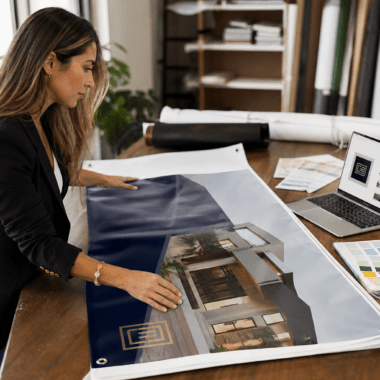
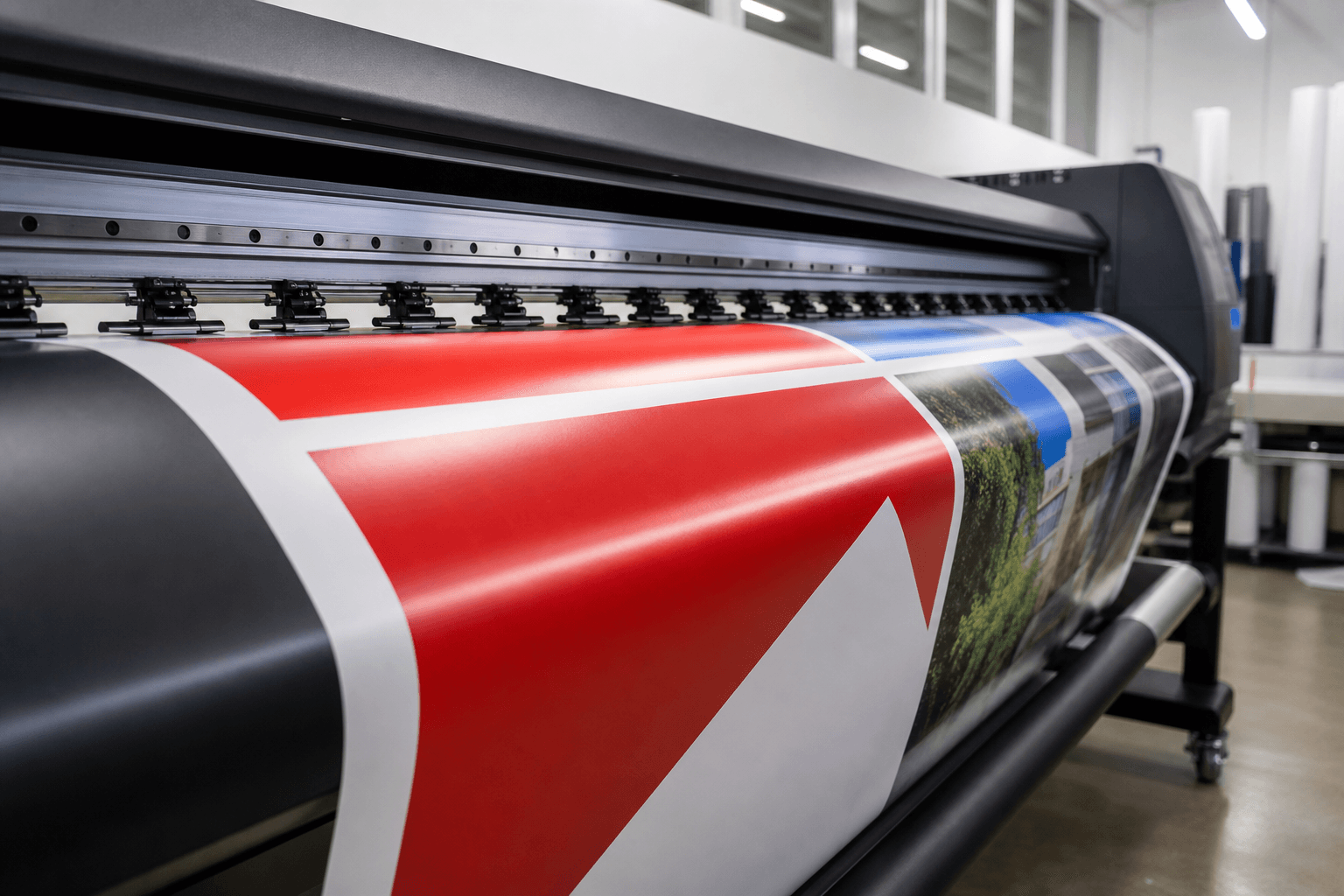
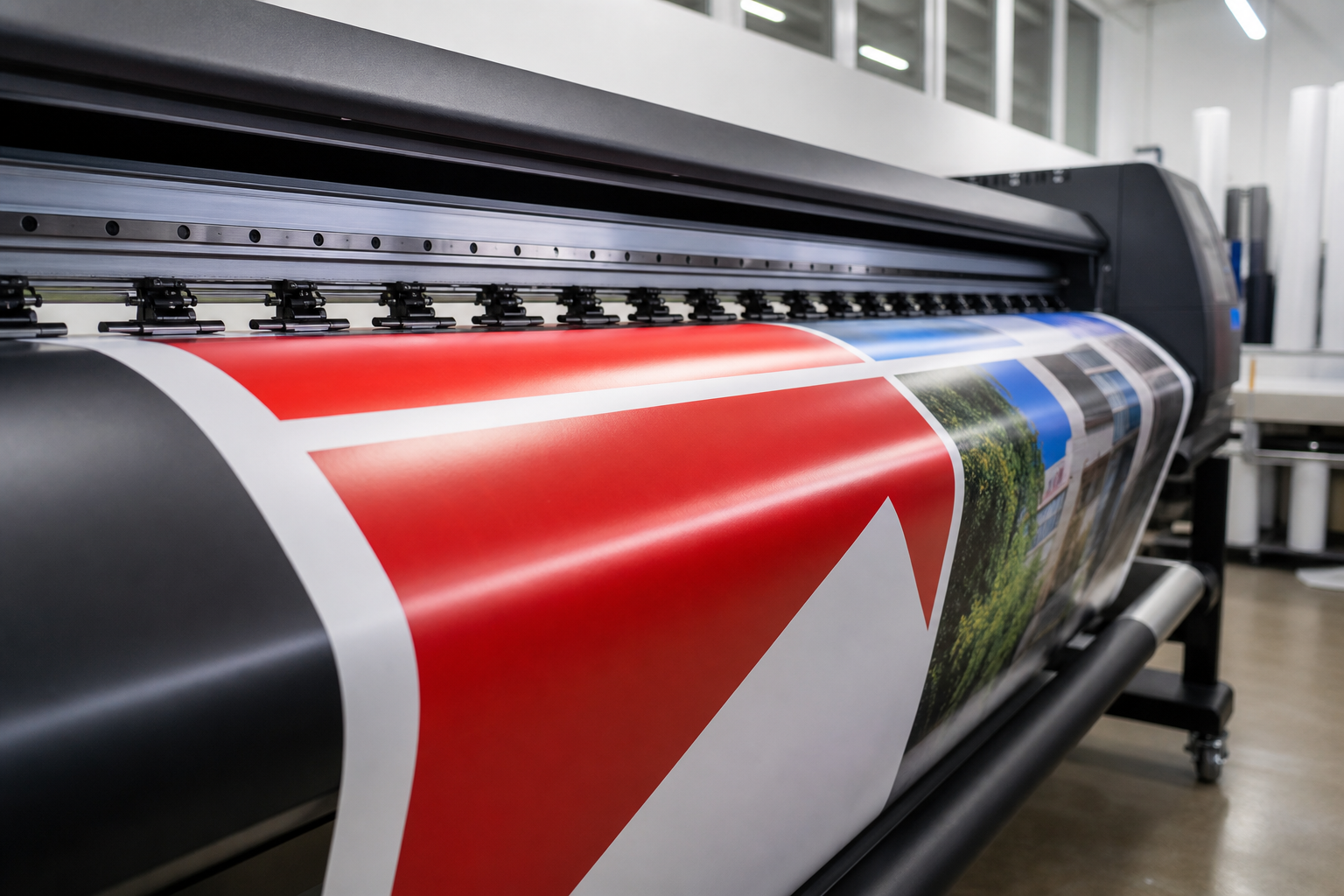
- Digital large-format printing: Directly prints artwork onto vinyl, paper, or rigid boards. Ideal for short runs, quick turns, and full-color graphics.
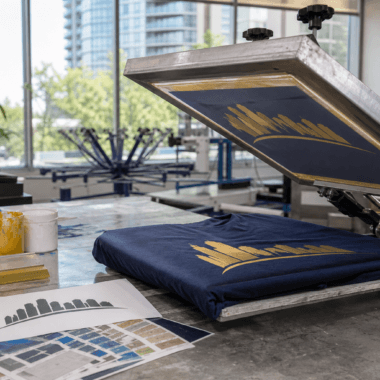
- Screen printing: Pushes ink through a stencil (screen) onto the material. Efficient for high-quantity, limited-color designs and certain specialty inks.
- Cut vinyl and plotting: Solid-color films cut into shapes or letters for windows, vehicles, and clean lettering with excellent durability.
- Direct-to-substrate UV printing: Cures ink instantly on rigid materials (e.g., ACM, wood, acrylic) and supports specialty textures or white ink underlays.
- Sublimation and fabric printing: For tension-fabric displays, flags, and soft signage with vibrant color and easy shipping.
When reviewing quotes, compare not just price but also ink type, finishing (laminate, hem, grommets), and hardware—these influence lifespan and total cost of ownership.
File preparation and proofing checklist
Clean prepress practices speed production and prevent costly reprints. Run through this checklist before you approve a job.
- Correct dimensions and scale: Build files at full size when possible. If scaled, annotate the scale clearly on the proof.
- Safe margins and bleed: Keep critical text and logos inside safe areas; include adequate bleed for edge-to-edge designs.
- Resolution and vector art: Use vector for logos and line art; set raster images to sufficient effective resolution at final size.
- Color mode: Work in a print-appropriate color space and request a physical or calibrated proof when color accuracy is important.
- Fonts and strokes: Outline fonts or provide packaged files; expand thin strokes that might disappear at scale.
- Transparency and effects: Flatten or verify effects render correctly in the output format.
- QR codes and small elements: Test-scan printed samples at the expected viewing distance; avoid placing codes on highly reflective areas.
- Variable information: Double-check phone numbers, URLs, addresses, and dates. Have a second person proofread.
- Finishing marks: Indicate grommet positions, pole pockets, cut paths, and fold lines on a separate layer or as a diagram.
Installation and maintenance basics
Even the best print can fail without proper installation. Match mounting methods to surfaces and conditions.
- Ground and soil: Use H-stakes, U-channel posts, or T-posts driven to adequate depth. Add cross-bracing for wind-prone areas.
- Walls and masonry: Anchor with appropriate fasteners; for temporary use, consider removable adhesives or frames.
- Glass and smooth surfaces: Apply removable vinyl or use suction hardware. Clean and dry the surface thoroughly before installation.
- Fencing: Zip ties, bungee cords, or wire with reinforced grommets. Use multiple attachment points to distribute load.
- Freestanding displays: Retractable banners and A-frames should be placed on level surfaces; use weights if crowds or drafts are expected.
For care and longevity:
- Wipe with a soft, non-abrasive cloth and mild cleaner; avoid harsh solvents unless the material is rated for them.
- Inspect stress points (corners, grommets, seams) periodically and repair promptly.
- Store banners rolled (not folded) and rigid signs flat to prevent creasing or warping.
Budgeting and timelines
Accurate timelines and realistic budgets reduce last-minute compromises. Consider:
- Quantity vs. unit cost: Larger runs can lower per-unit pricing but may exceed immediate needs. Balance inventory risk with savings.
- Size and finishing: Larger formats, specialty laminates, or hardware add cost. Compare configurations for total value.
- Color coverage and complexity: Heavy ink coverage, spot colors, or white ink can affect pricing and schedule.
- Proof cycles: Build time for design revisions and approvals. A single, consolidated feedback round is often faster than many small changes.
- Installation logistics: Factor in site access, ladders/lifts, permits or permissions, and weather contingencies.
Request quotes that itemize substrate, printing method, finishing, hardware, and installation. Clear line items make trade-offs easier when optimizing for cost or speed.
Compliance and permissions
Before printing, confirm where the sign will be placed and who controls the space. Requirements vary by property type and governing body. In general:
- Check property owner, landlord, or facilities management for placement rules.
- Review community, venue, or event guidelines for size, location, and duration limits.
- For public-facing or exterior signage, verify any permissions that may be necessary in your area.
- Ensure content meets organizational brand and accessibility standards where applicable.
Document approvals and keep drawings, proofs, and installation photos in a shared folder for future reference and reorders.
Vendor evaluation checklist
Use these prompts to compare proposals and align expectations:
- Which substrate and thickness are specified, and why was it chosen for the environment and duration?
- What printing method and inks will be used, and is a sample or proof available for review?
- What finishing is included (laminate type, hems, grommet spacing, pole pockets, edge cap)?
- What hardware or installation support is provided, and what is the recommended mounting method?
- How are color matching and brand consistency handled across reorders?
- What are the production and proofing timelines, and what could impact them?
- What packaging and storage recommendations are provided for multi-use signage?
Frequently asked questions
Which sign material should I choose for outdoor use?
For short-term outdoor campaigns, corrugated plastic is a cost-effective choice. For longer-term or premium appearance, aluminum composite (ACM) offers excellent durability and dimensional stability. Pair either with appropriate hardware and, if needed, protective lamination.
How big should my text be to read from a distance?
As viewing distance increases, letter height should increase accordingly. When planning, prioritize a clear headline and keep supporting text minimal. If the sign must be seen from far away, scaling type sizes up and maximizing contrast are the safest choices.
Do I need bleed and safe margins on my file?
Yes. Include adequate bleed for edge-to-edge prints so minor trimming variances don’t reveal unprinted edges. Keep critical elements (logos, phone numbers) inside safe margins so they are not clipped.
What’s the difference between a banner and a roll-up display?
A banner is a flexible print finished with hems and grommets or pole pockets for hanging or lashing. A roll-up (retractable) display integrates the graphic into a base cartridge that pulls up on a pole for quick setup and transport.
Can I use photos from my phone for large signs?
Sometimes. It depends on the final size and viewing distance. High-resolution, well-lit images can scale for medium formats, but large outdoor boards benefit from professional images or vector artwork. Ask your provider to check effective resolution at final size.